
What this H11 halogen baseline found
This page records an H11 halogen reference for the H11 LEDr comparison series. It is a baseline for the documented optical setup, not a claim about every H11 halogen bulb, headlamp or vehicle. The reference produced an EMAX peak of 842.3 lux and a B50L reading of 20.7 lux.
The useful result is the complete nine-point record, supported by a white-wall beam image and a rainbow hotspot map. Those three evidence types describe the same recorded setup from different angles. None of them, alone, proves vehicle compatibility, complete road performance or approval.
Reference identity and scope
Reference: H11 halogen
Technology: filament-based halogen reference
Scope: visible beam shape, hotspot distribution and E-Mark panel illuminance.
LED emitter construction, measured chip/emitter thickness, LED thermal behaviour and LED operating noise are outside this page’s scope. The reference is included so readers can compare the recorded illuminance pattern with the H11 LEDr pages using the same point names.
Test method and evidence boundary
Illuminance was recorded at 3.5 m in a 26°C room after 30 minutes of operation. Values are reported in lux at the nine defined E-Mark panel points. The white-wall photograph records the visible low-beam pattern, the rainbow map records relative hotspot distribution, and the composite records the numeric point readings.
This is a same-setup comparison record. It is not the official approval procedure under ECE R37, and it does not establish an R37 approval result for the reference or a vehicle. Aim, reflector geometry, lamp condition, camera exposure and installation position can affect what a reader sees in a different vehicle.
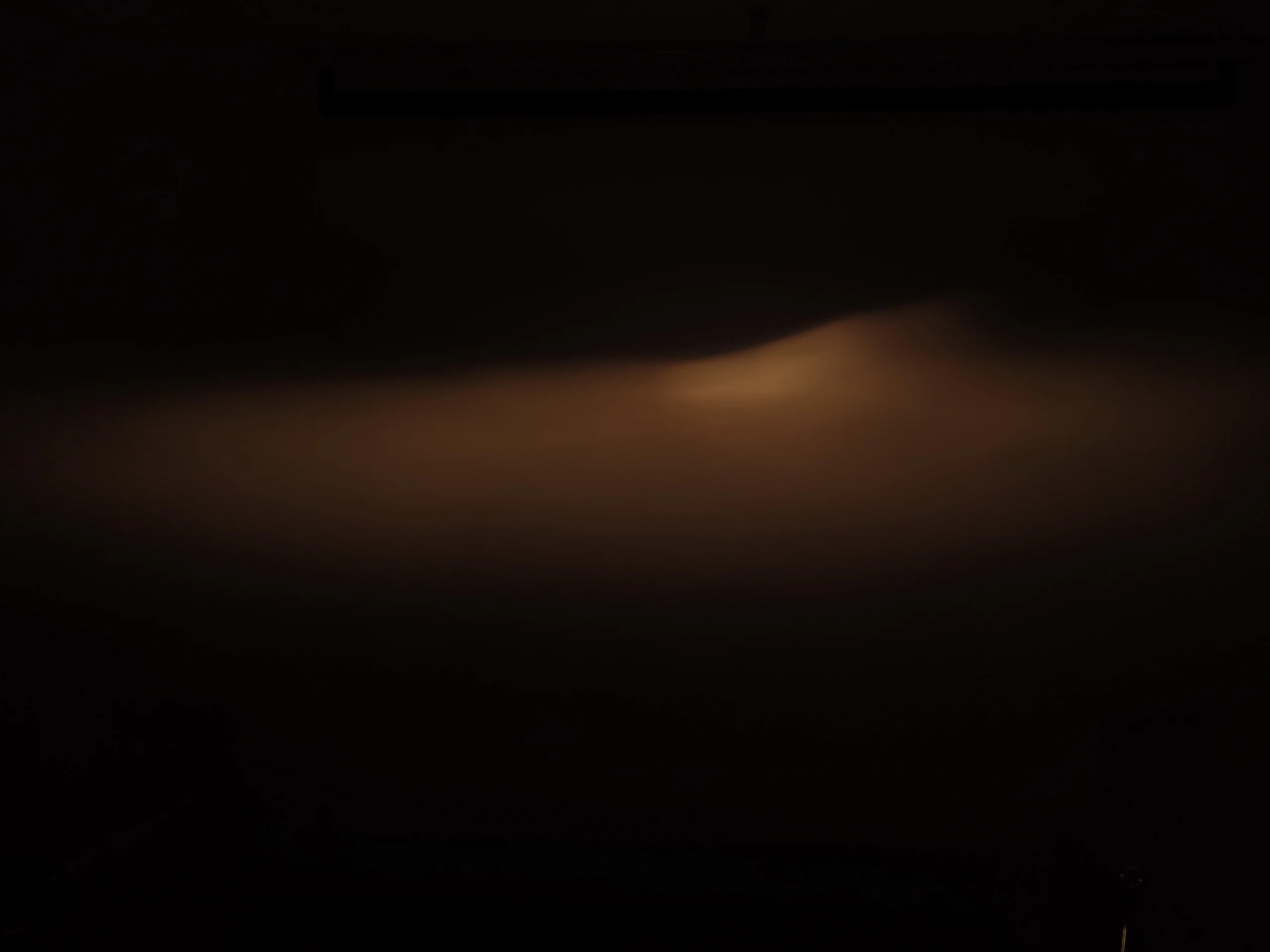
White-wall beam pattern
The white-wall image shows the visible spread and brighter areas produced by the halogen reference in the stated setup. It is useful for seeing the shape of the recorded beam, but it should be read as a photograph of this test arrangement. Wall distance, aim and headlamp optics matter when comparing the appearance.
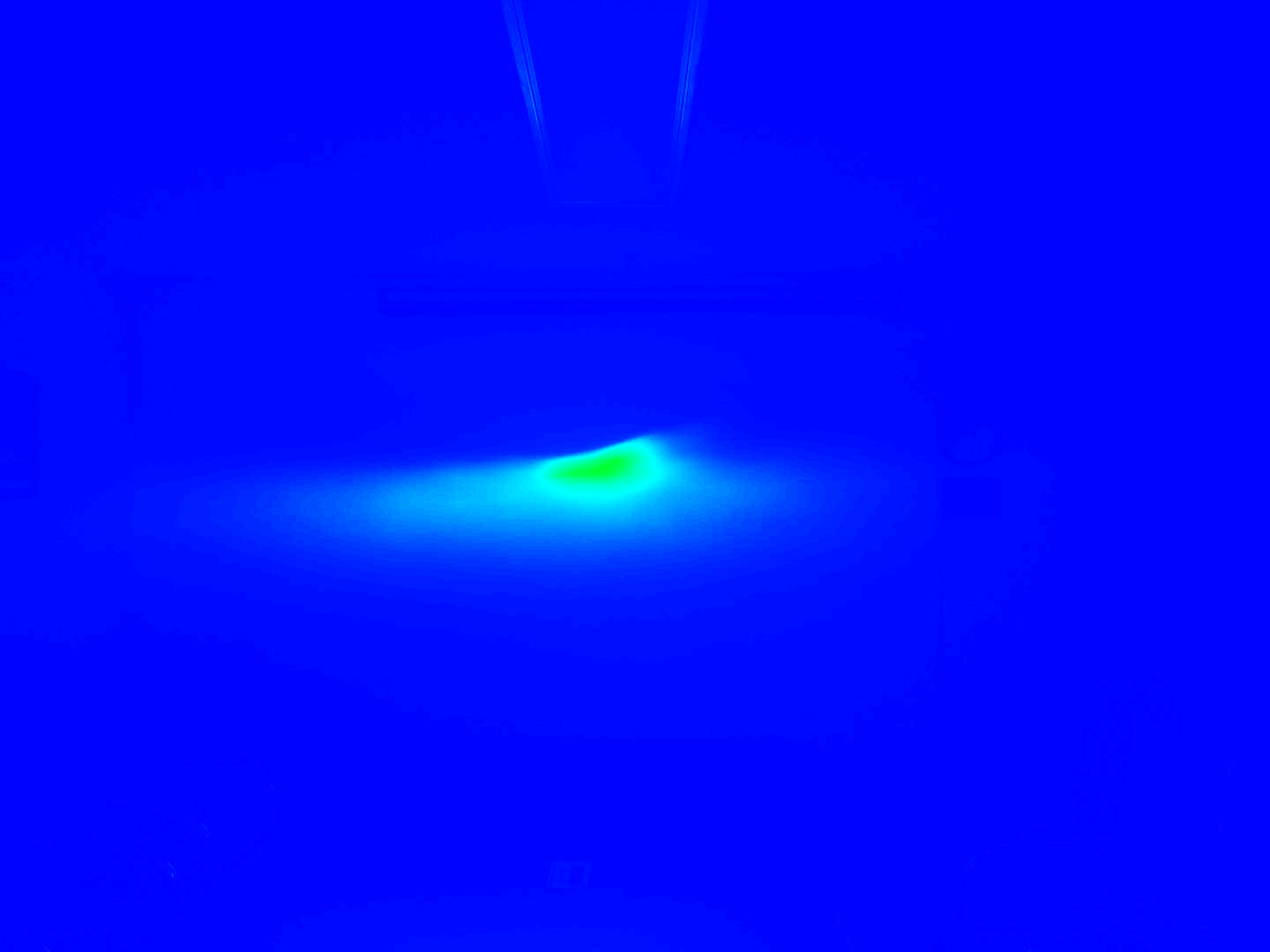
Rainbow hotspot map
The rainbow map adds spatial context to the wall image by showing the relative position of stronger areas in the recorded beam. Its colour scale is not a legal or glare measurement. It is most useful when viewed alongside the E-Mark panel readings below.
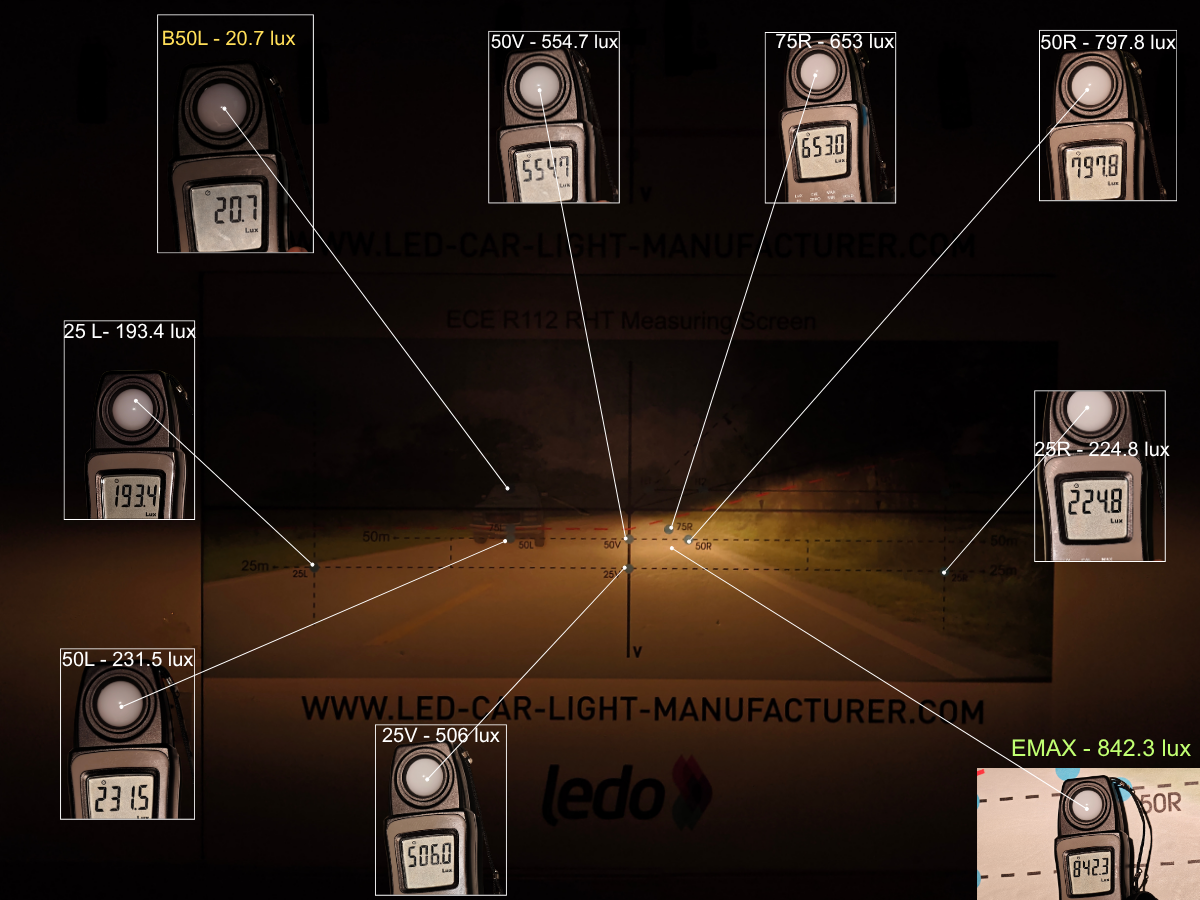
Complete nine-point illuminance record
The E-Mark composite records nine readings in lux. The point labels describe locations on the test panel. They are not interchangeable, and the peak value does not replace the rest of the table.
| Point | Measured illuminance | Reading area |
|---|---|---|
| 25L | 193.4 lux | Left-side point |
| 50L | 231.5 lux | Left-side point |
| B50L | 20.7 lux | Glare-control-related point |
| 50V | 554.7 lux | Centre point |
| 25V | 506 lux | Centre point |
| 75R | 653 lux | Right-side point |
| 50R | 797.8 lux | Right-side point |
| 25R | 224.8 lux | Right-side point |
| EMAX | 842.3 lux | Peak reference |
How to read B50L and EMAX
The left-side readings were 193.4 lux at 25L and 231.5 lux at 50L. The centre readings were 554.7 lux at 50V and 506 lux at 25V. On the right, 75R measured 653 lux, 50R measured 797.8 lux and 25R measured 224.8 lux.
B50L is glare-control-related. Its 20.7 lux value should not be ranked with a higher-is-better rule used for ordinary illumination points. The value alone does not establish a glare outcome. EMAX is the 842.3 lux peak reference at one location, not a complete-beam score.
What this baseline supports
This reference gives the comparison series a recorded filament-based point pattern: 25L and 50L are lower than the centre and main right-side points in this setup, while EMAX is 842.3 lux. It does not describe every halogen product, and it cannot be converted into a universal brightness or road-performance claim.
For a vehicle decision, readers still need to check the actual H11 interface, lamp aim, reflector condition and local approval requirements. A local bench record and an official regulatory document answer different questions.
H11 halogen baseline FAQ
Why is halogen included in the H11 LEDr article series?
It provides a recorded filament-based optical baseline under the defined illuminance-point method. It is not classified as an H11 LEDr product.
What was the H11 halogen B50L reading?
The recorded value was 20.7 lux. B50L is glare-control-related and is not treated as a simple higher-is-better point.
What was the H11 halogen peak reading?
The recorded EMAX value was 842.3 lux at the stated 3.5 m illuminance distance.
Does this page prove ECE R37 approval?
No. The page reports a local illuminance record. ECE R37 approval requires the applicable regulatory documentation and conditions.