
Quick review summary
The E4E H11 LEDr is an H11-format LED replacement with a documented connector, front emitter area and rear cooling structure. This review covers the product images, packaging record, beam evidence, nine-point illuminance table, emitter-area temperature and close-range noise.
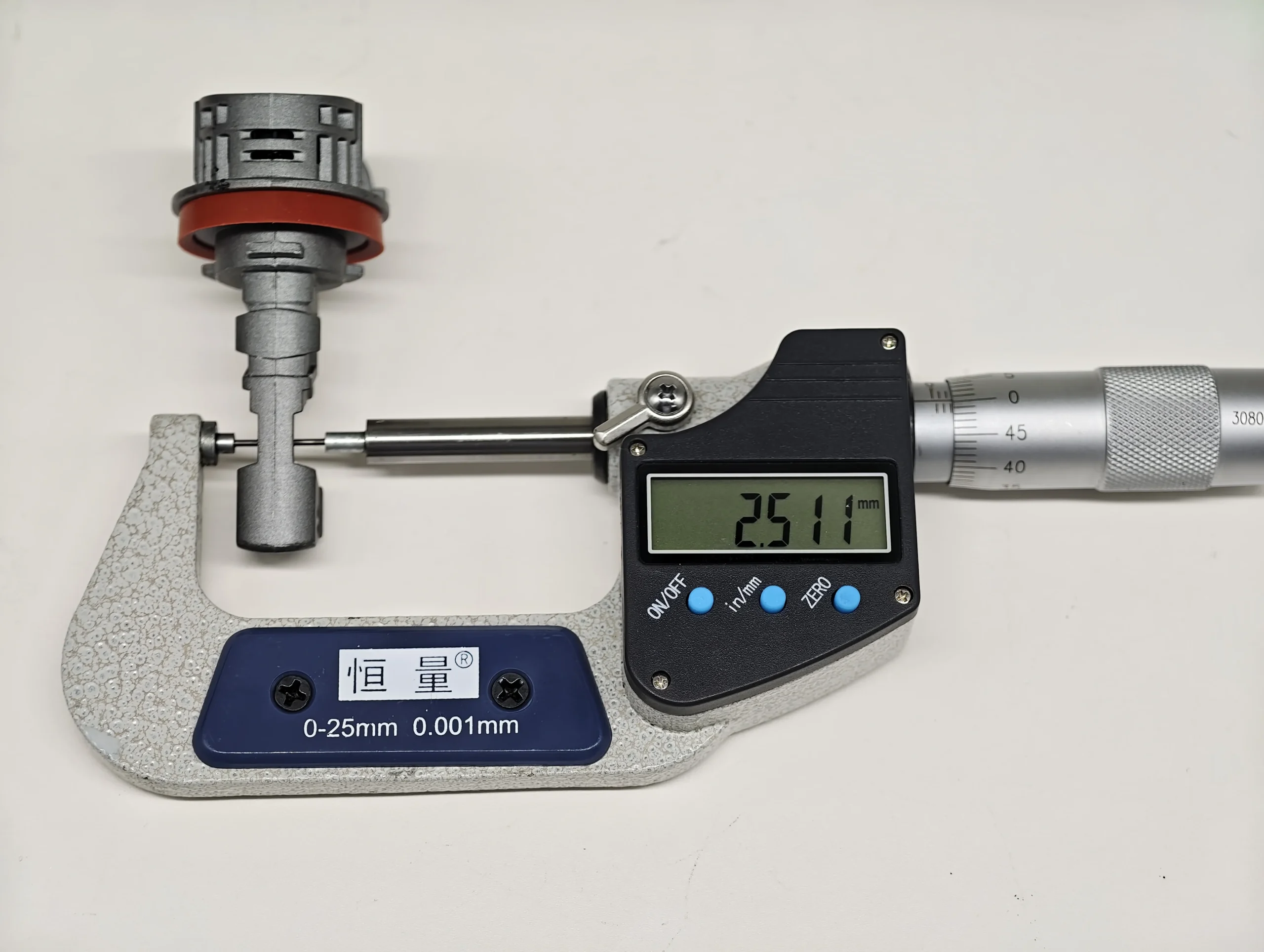
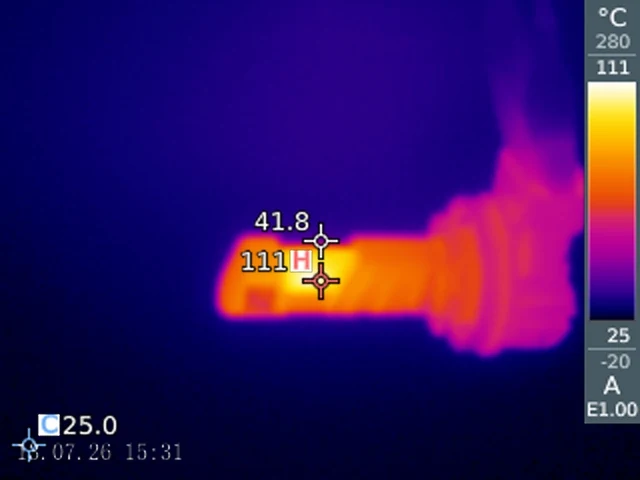
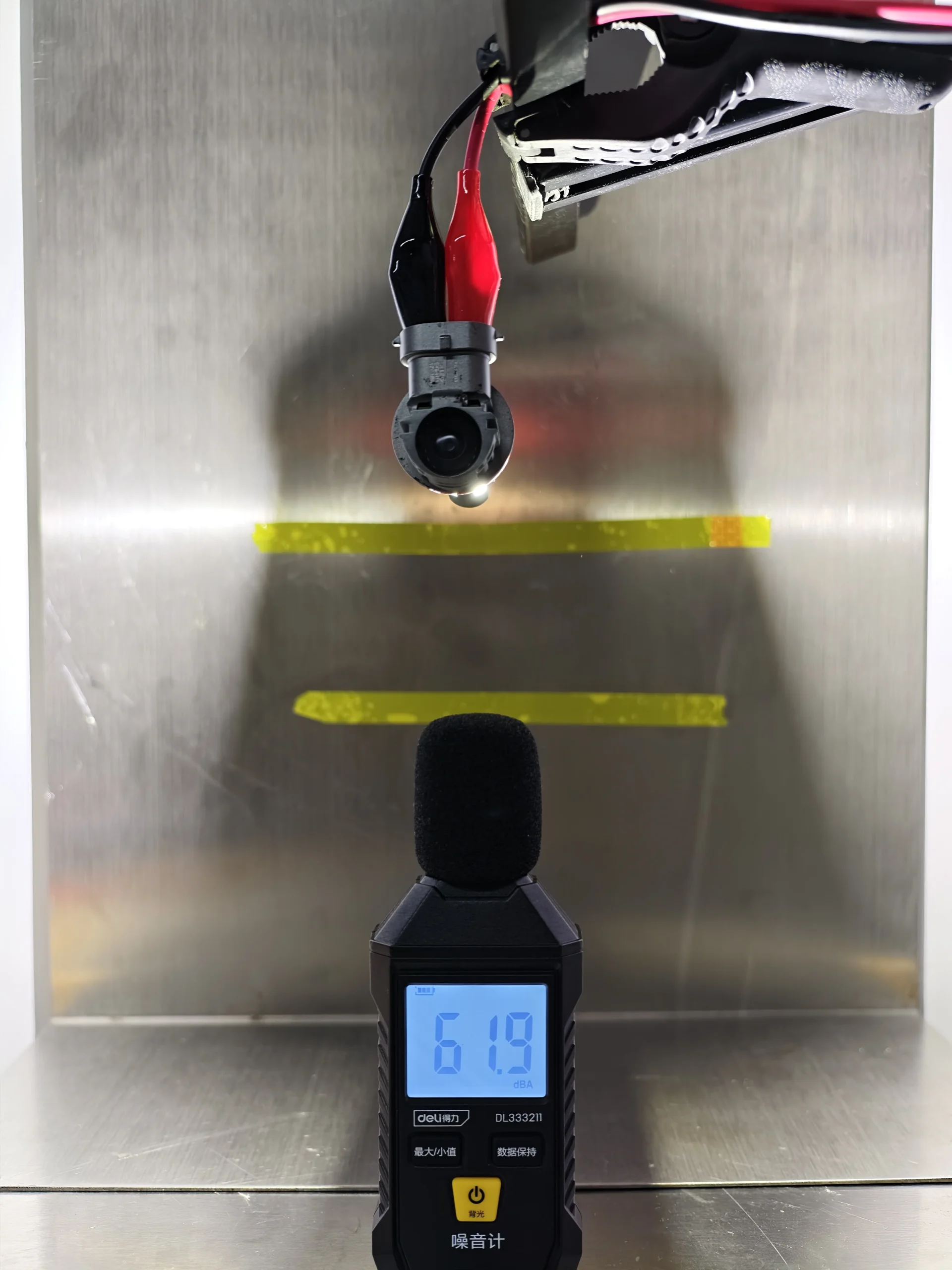
The current public wording is approval status under re-review. In the recorded setup, E4E reached 1,593 lux at EMAX and 29.4 lux at B50L. Its measured chip/emitter thickness was 2.511 mm, emitter-area temperature was 111 °C after 20 minutes, and operating noise was 61.9 dBA at 3.5 cm.
Those numbers answer different questions. The white-wall photograph shows the visible beam, the rainbow map adds spatial context, and the E-Mark composite records lux at named points. Together they describe this product in this setup. They do not establish a complete road result or vehicle-specific approval.
Product identity and current approval status
Product: E4E H11 LEDr
Bulb format: H11
Review scope: construction, packaging evidence, optical evidence, temperature and operating noise.
The public wording for E4E is approval status under re-review. This article does not present that status as confirmed current approval and does not infer a reason for the re-review. The controlled measurements are a separate record. They are not an official ECE R37 type-approval test.
For the regulatory distinction, see the ECE R37 explanation linked in the related articles below.
E4E H11 LEDr fitment and product construction
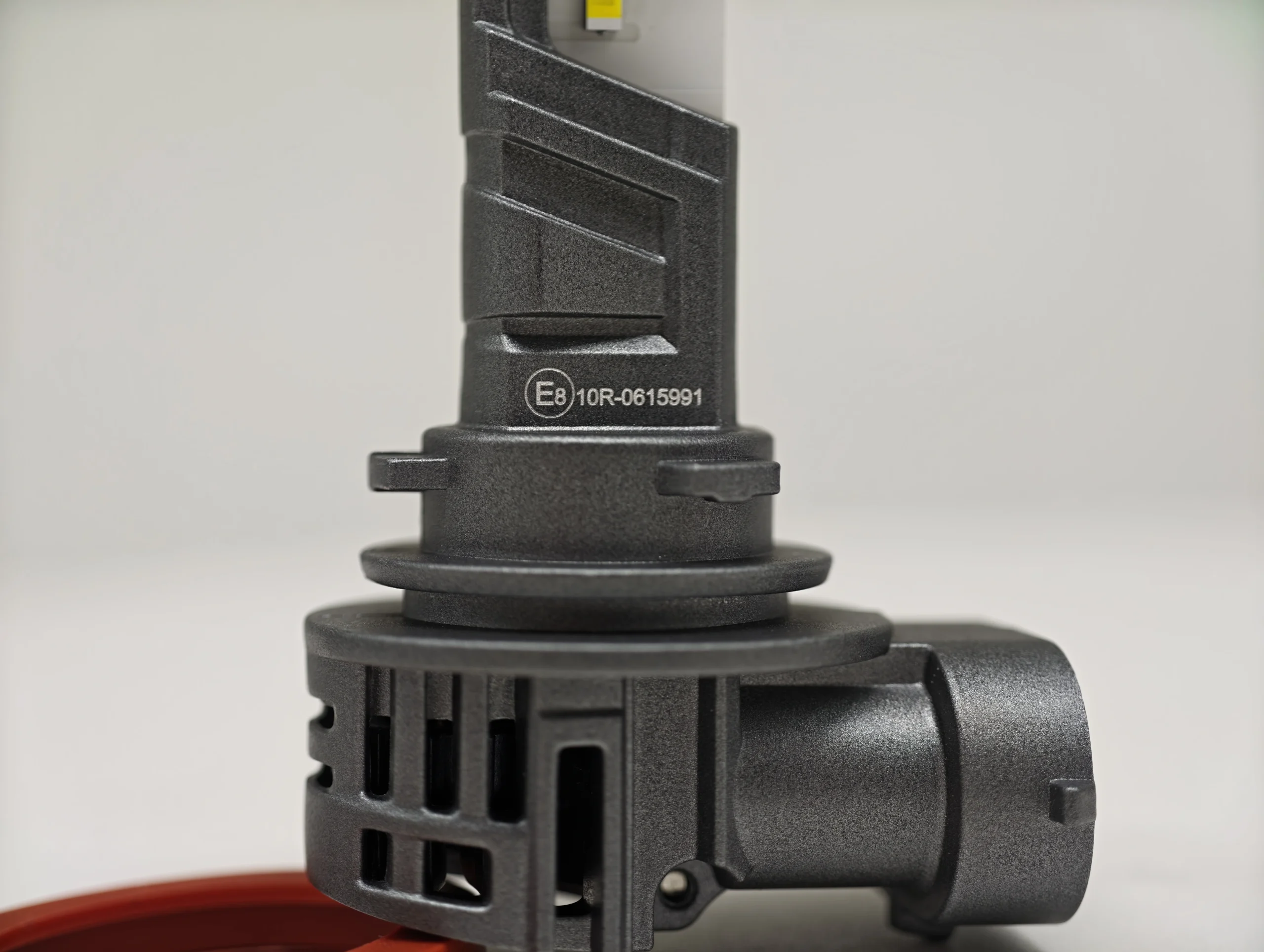
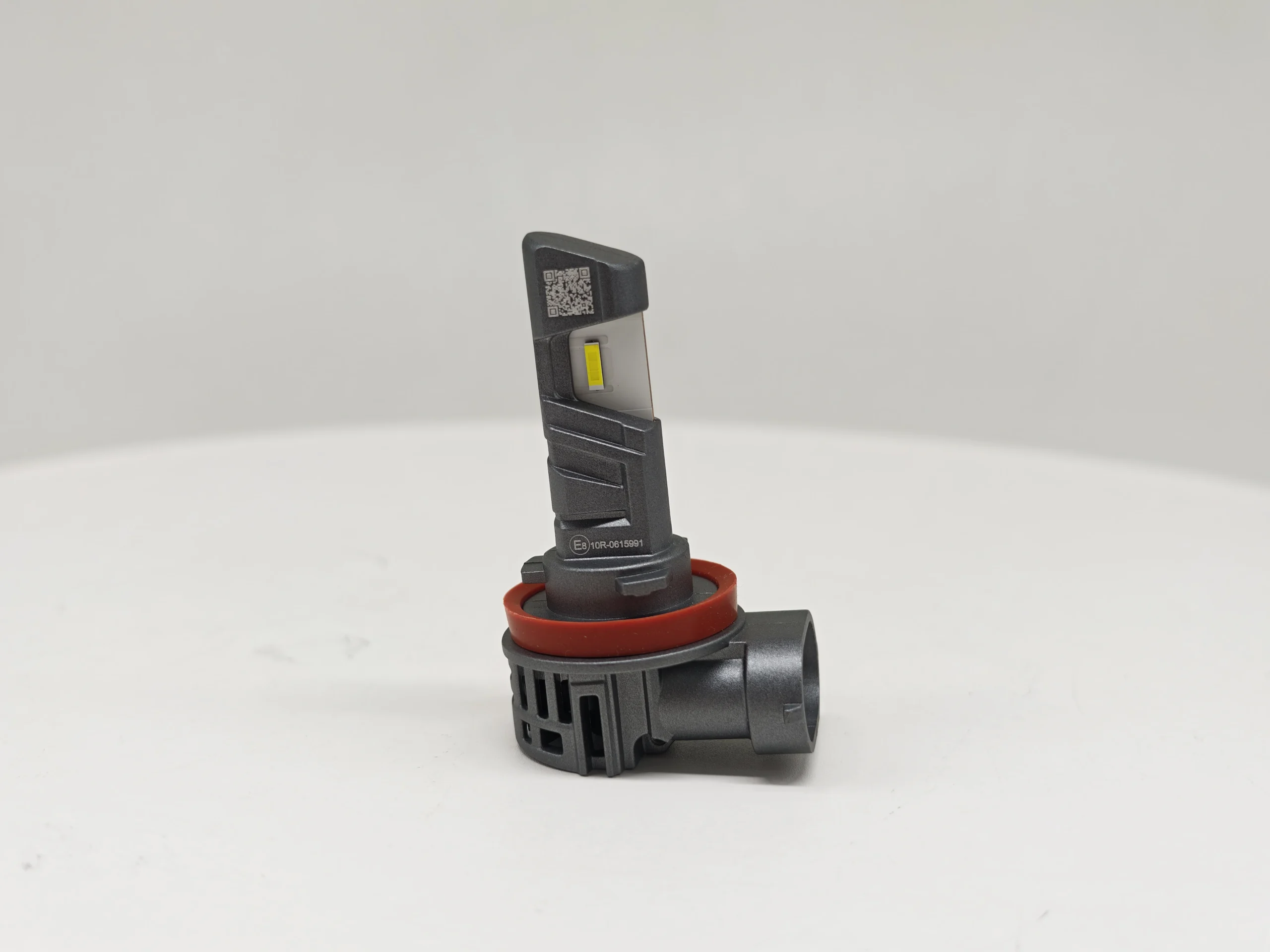
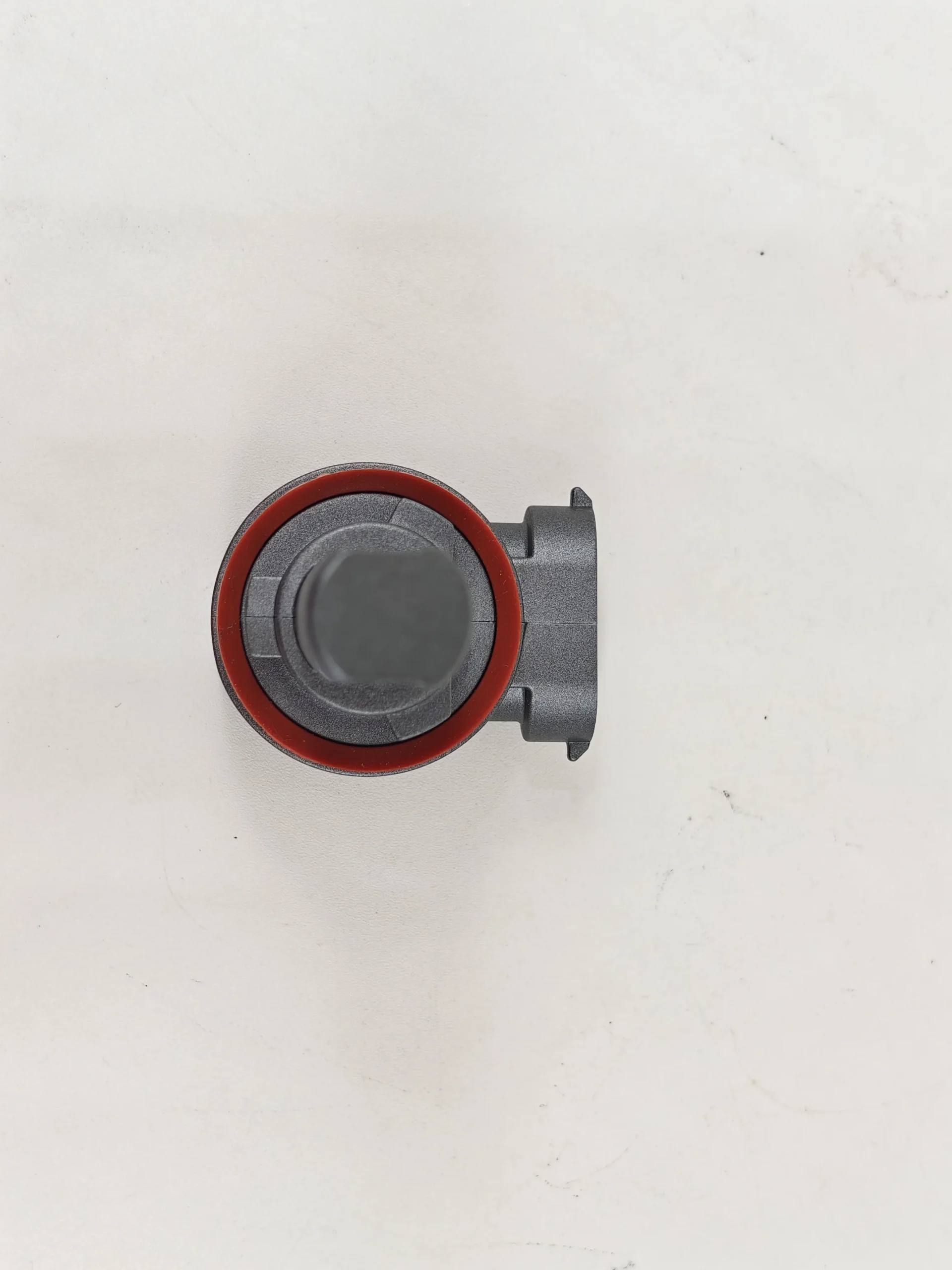
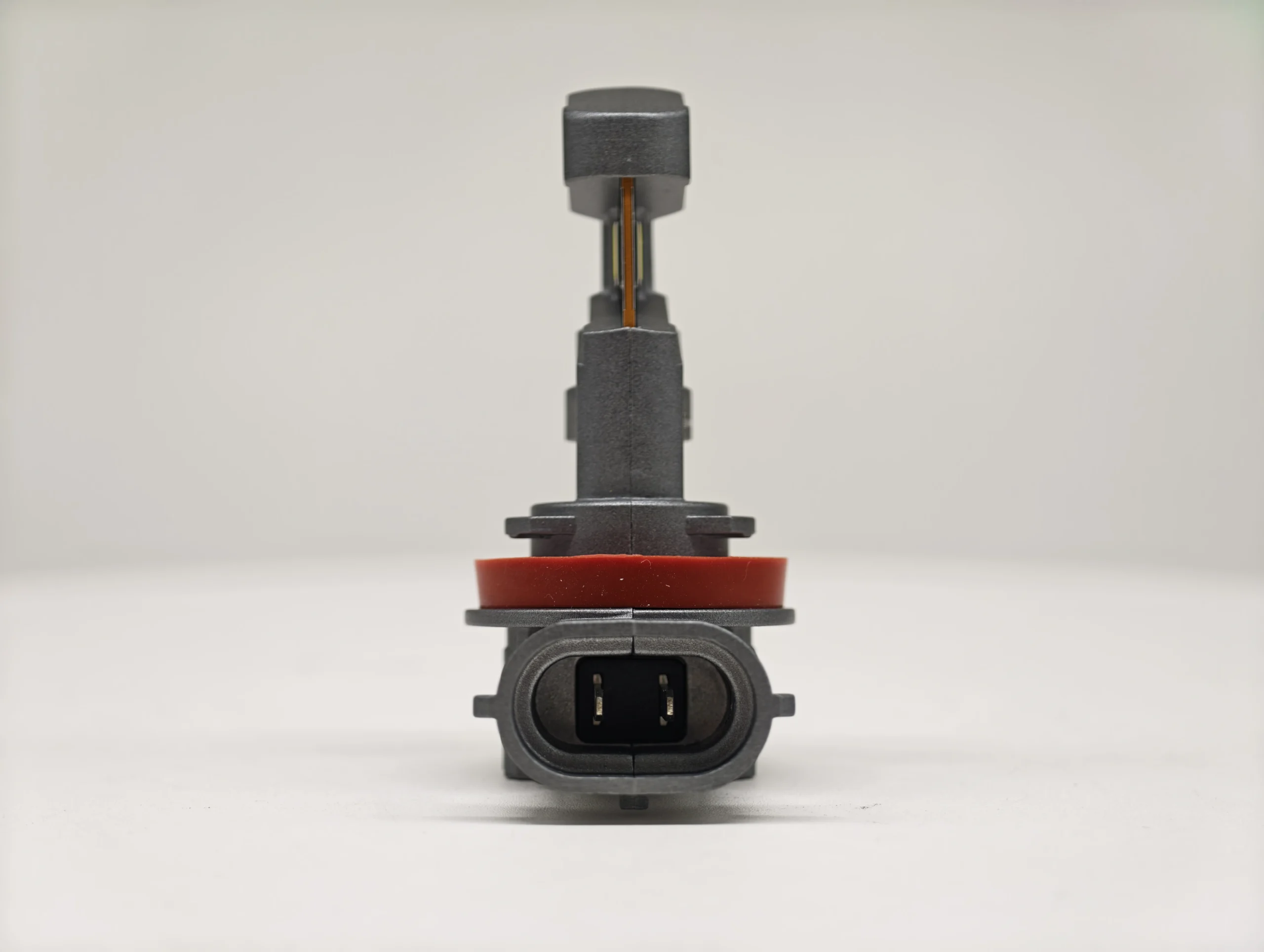
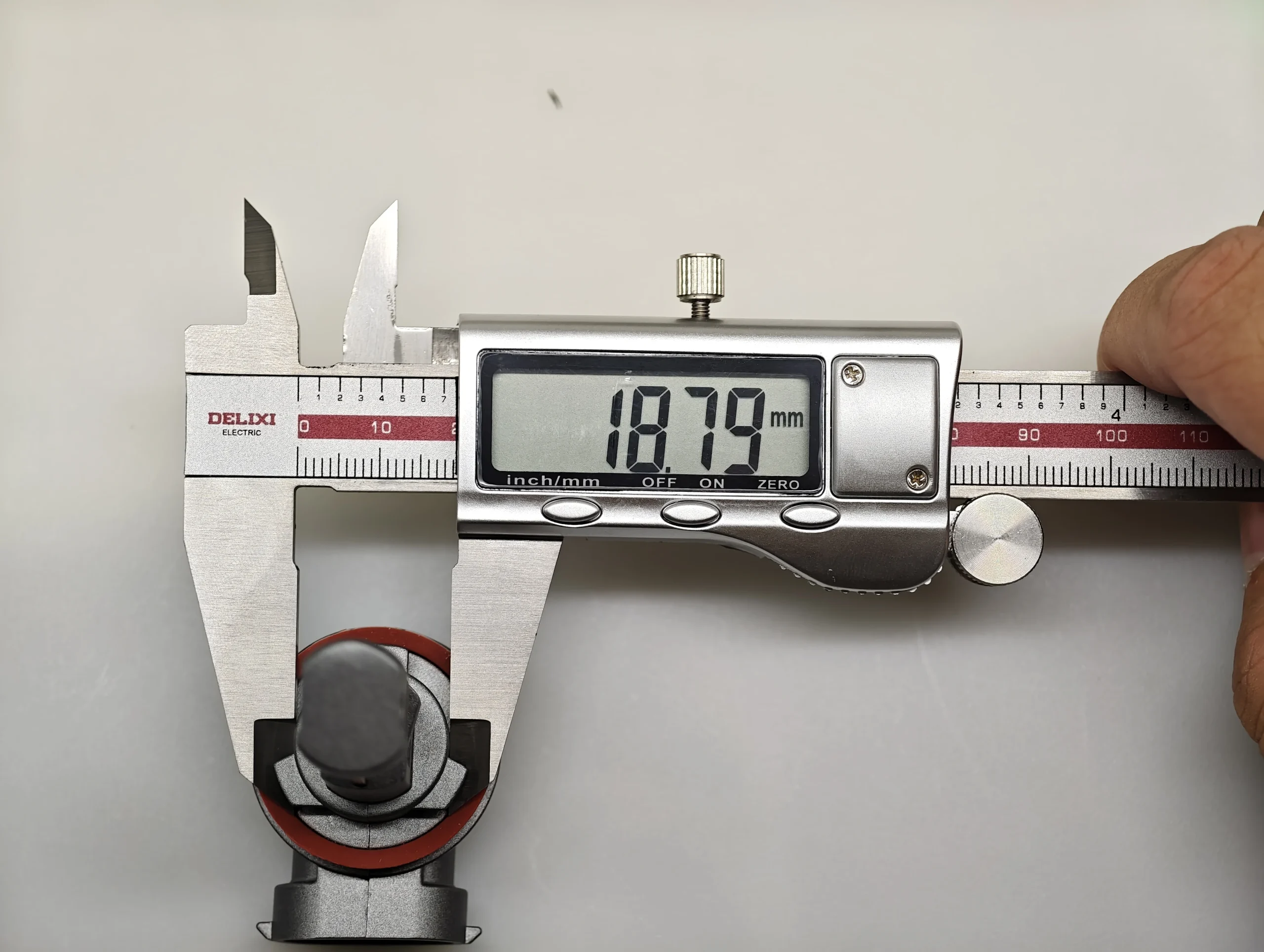
The product photographs document the supplied H11 interface, front blade, rear cooling structure and connected lead. They are useful for checking physical reference points before installation. They cannot confirm socket seating, dust-cap closure, rotation or clearance in a particular headlamp.
Packaging and included parts
The packaging images show the reviewed presentation, included contents and package measurements. They describe the recorded configuration rather than every retail configuration.
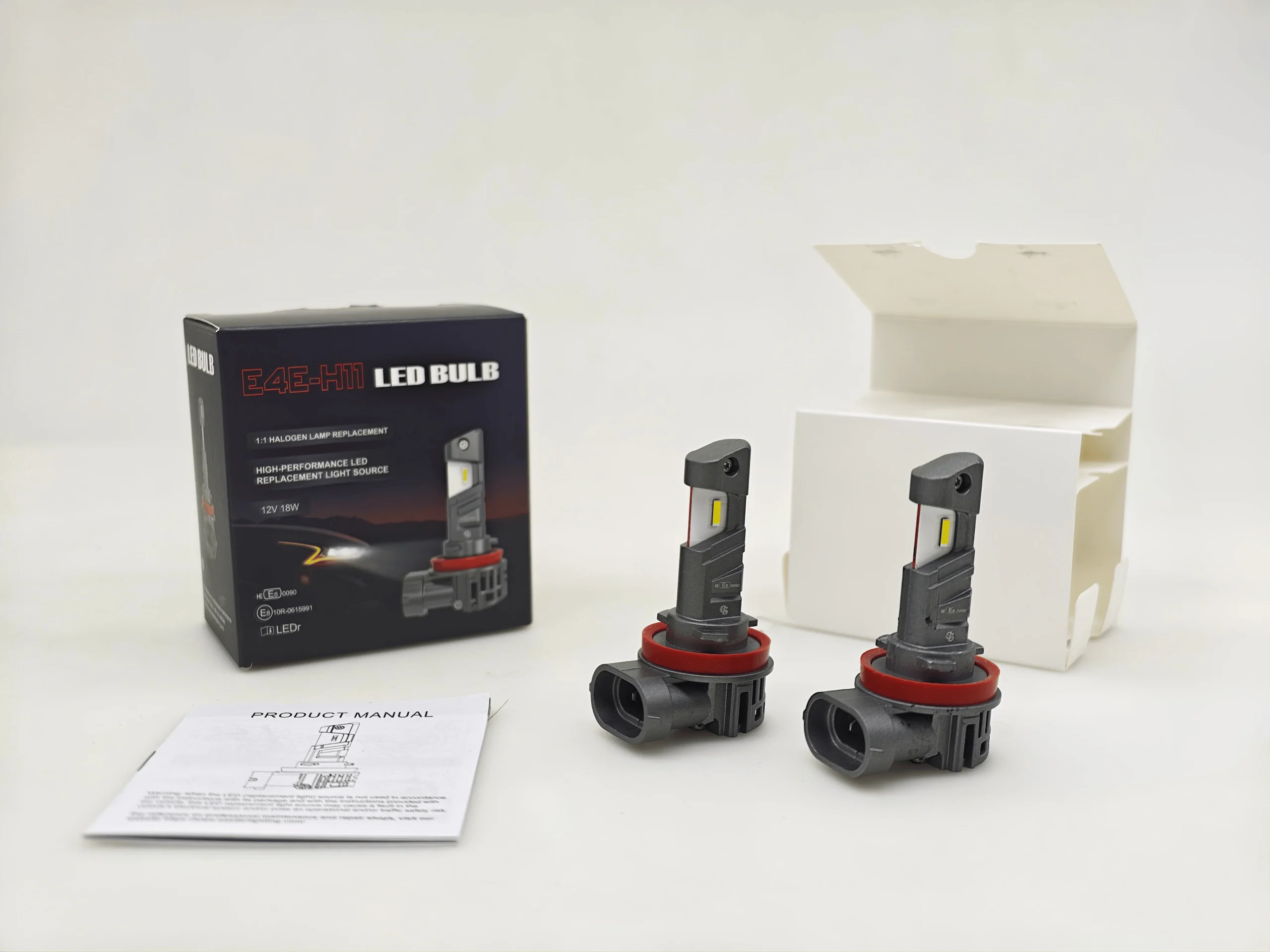
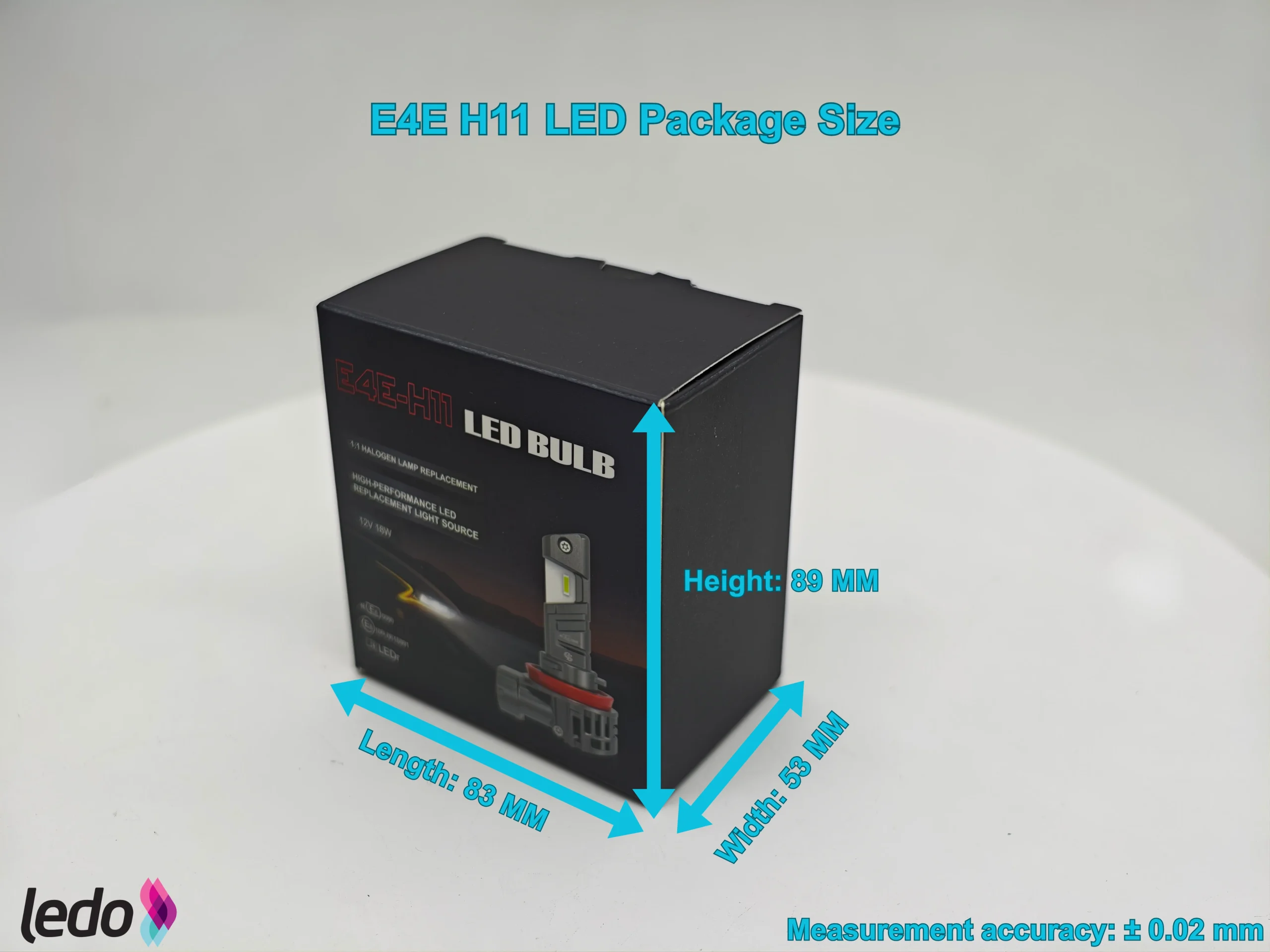
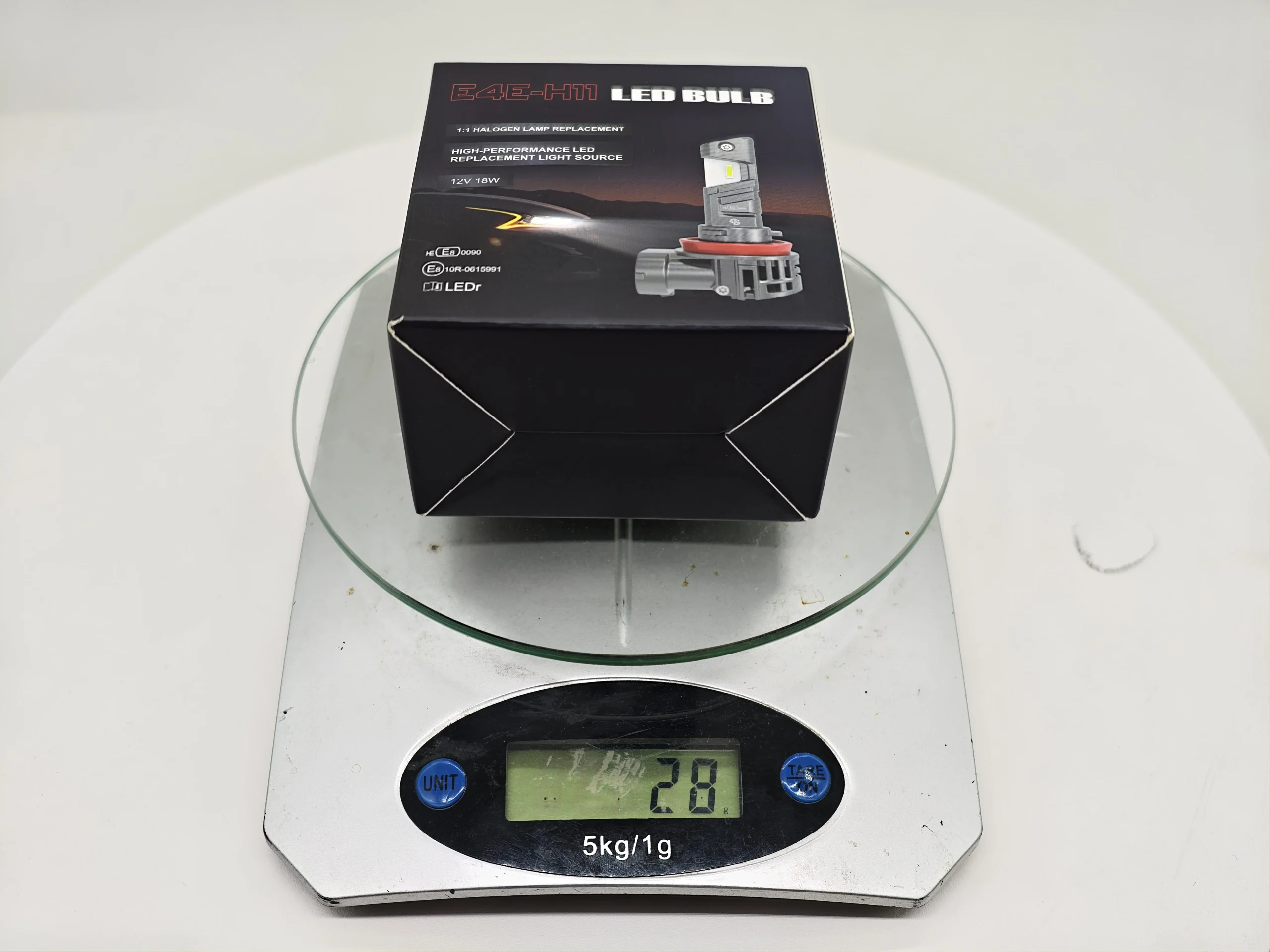
Product views, connector and lamp-body thickness
Emitter close-up and measured chip/emitter thickness
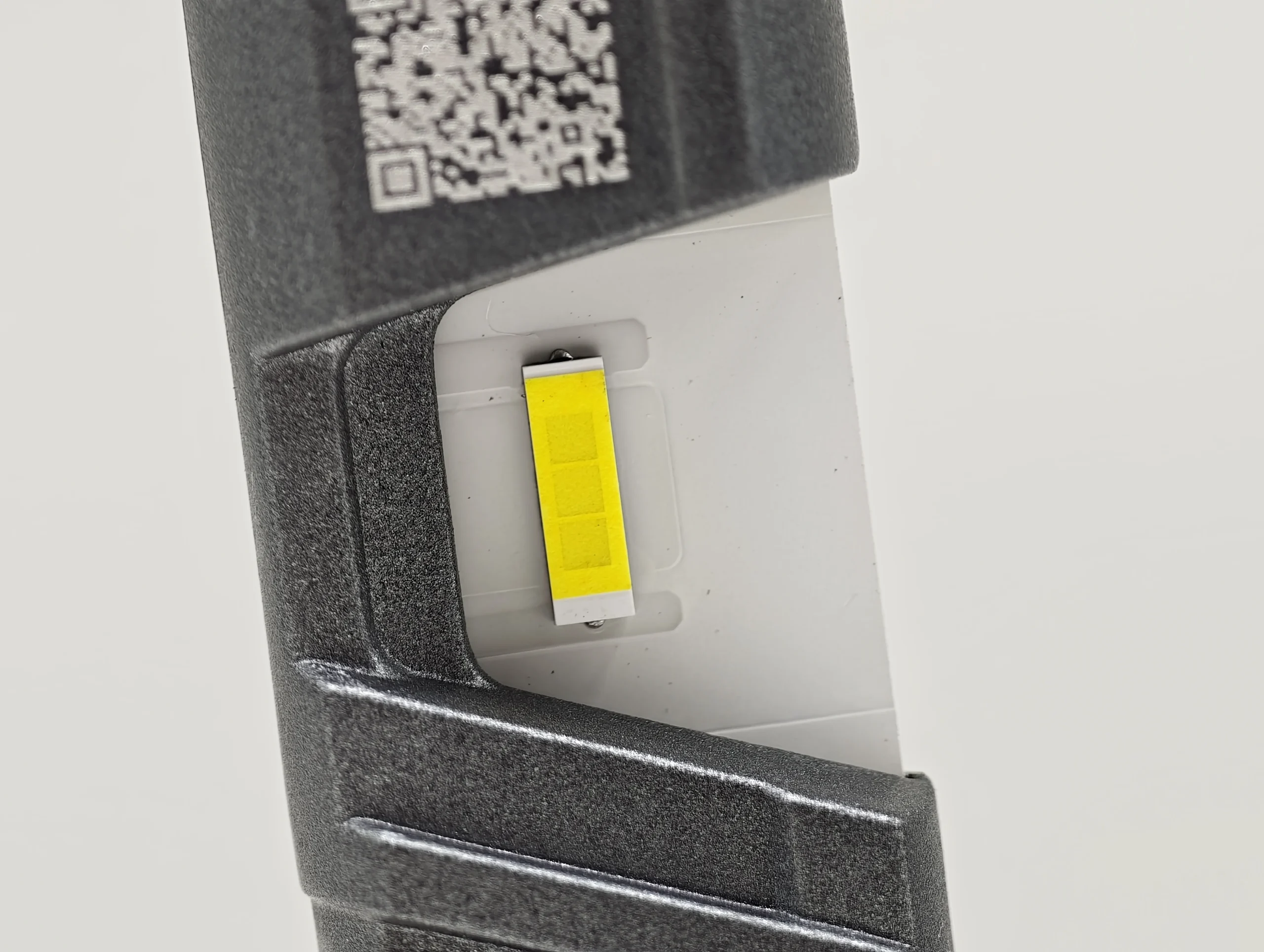
The front emitter close-up and adjacent measurement record the light-source geometry visible in the source images. The measured chip/emitter thickness is 2.511 mm. It is a physical measurement with the stated datum, not an R37 regulatory dimension, and it cannot independently predict beam shape or fitment.
Test method and evidence boundary
Illuminance was recorded in lux at 3.5 m in a 26 °C room after 30 minutes of operation. Temperature was recorded at the photographed emitter-area point after 20 minutes. Operating noise was recorded at 3.5 cm in dBA.
- Same-setup comparison: the white-wall image, rainbow map, E-Mark panel and thermal and noise readings are records from this setup.
- R37-defined requirement: the approval and optical terminology is explained only where the available record supports it.
- Not tested under the official approval procedure: this page does not establish luminous flux, Tcap, 60 °C retention, box-system behaviour, failure-state performance or complete vehicle approval.
White-wall beam evidence
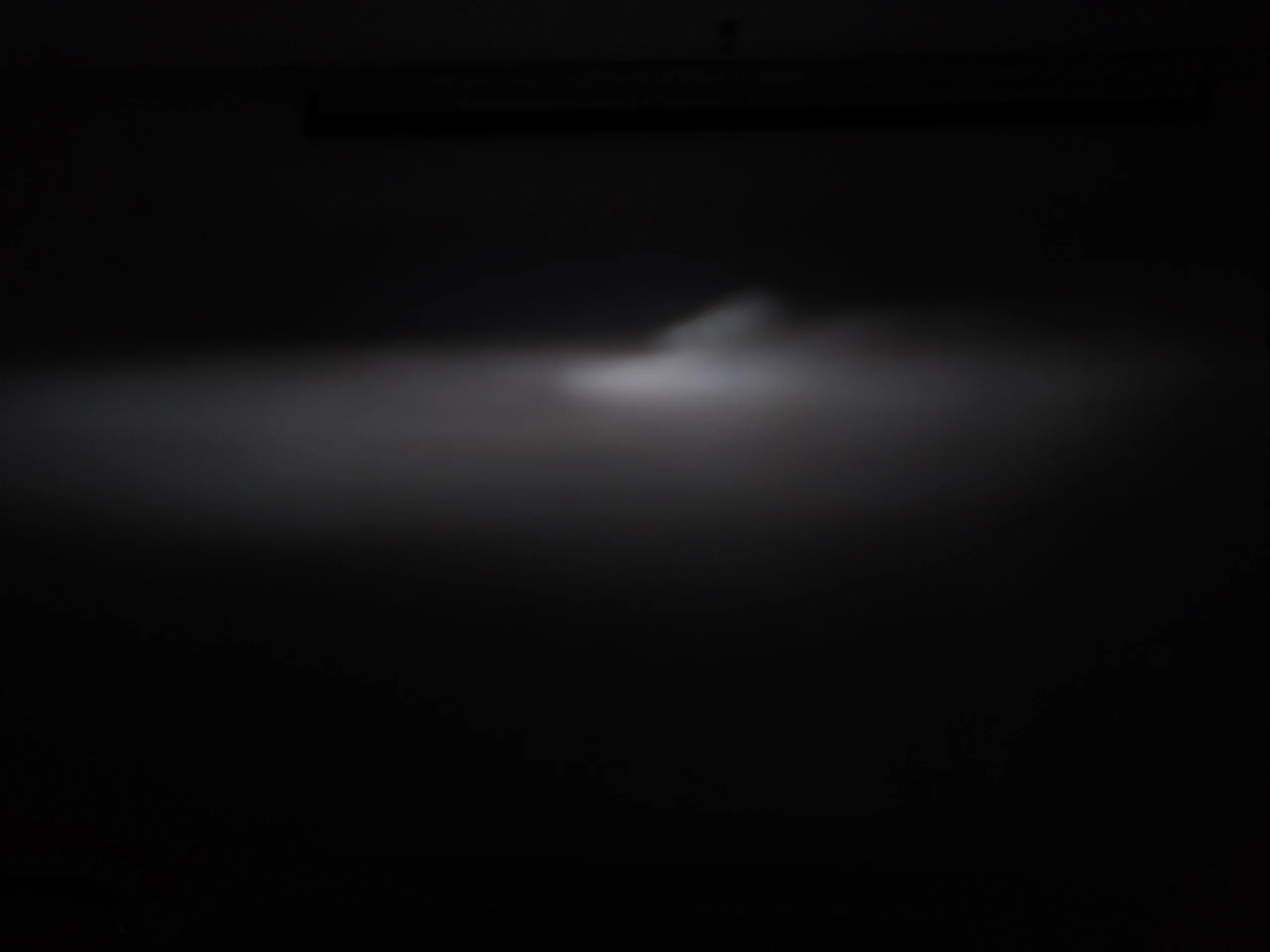
The white-wall photograph shows the visible low-beam spread, transition and brighter areas in the recorded setup. Aim, camera exposure, reflector geometry and headlamp design affect the image, so it is visual evidence for this setup rather than a complete road-performance conclusion.
Rainbow map and hotspot evidence
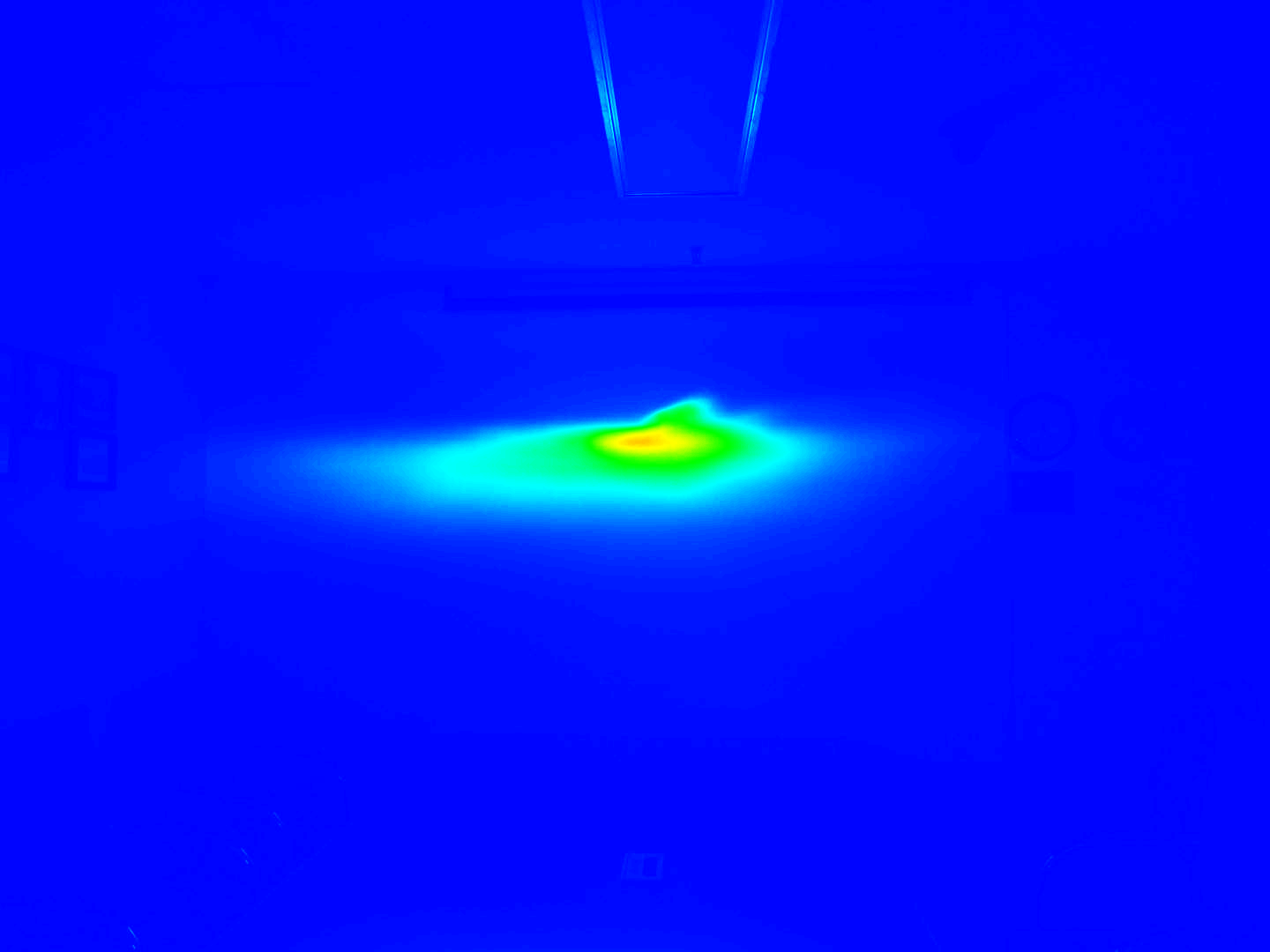
The rainbow map shows the relative colour distribution and hotspot position captured for E4E. It adds spatial context to the white-wall image. Its colour scale is not a lux value and does not independently establish glare control or approval.
E-Mark panel results and complete nine-point table
The E-Mark composite records nine illuminance values in lux. Point names identify locations on the measurement panel. 75R, 50R and 25R are right-side points, 25L and 50L are left-side points, and 25V and 50V are centre points.
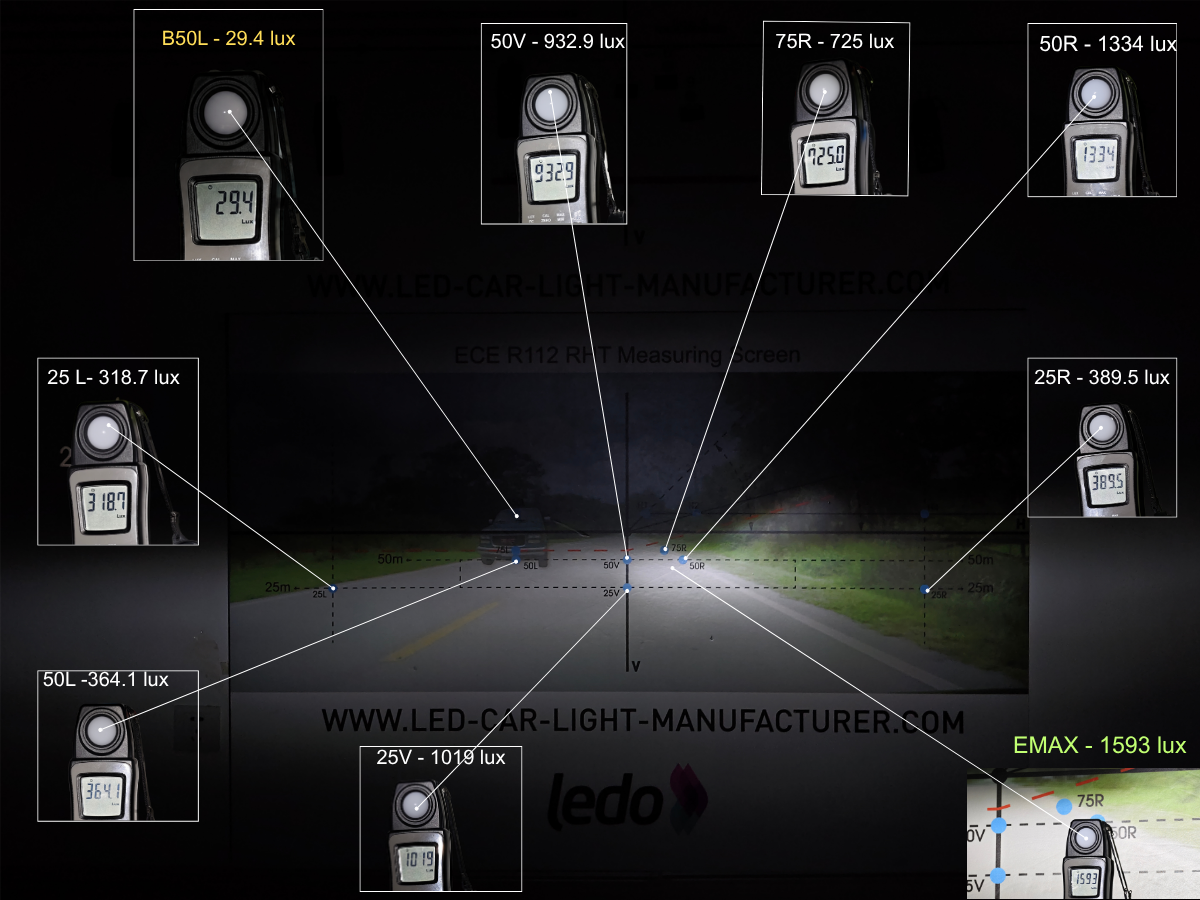
| Point | Measured illuminance | Evidence role |
|---|---|---|
| 25L | 318.7 lux | Left-side point |
| 50L | 364.1 lux | Left-side point |
| B50L | 29.4 lux | Glare-control-related point |
| 50V | 932.9 lux | Centre point |
| 25V | 1,019 lux | Centre point |
| 75R | 725 lux | Right-side point |
| 50R | 1,334 lux | Right-side point |
| 25R | 389.5 lux | Right-side point |
| EMAX | 1,593 lux | Peak reference |
The recorded centre values were 932.9 lux at 50V and 1,019 lux at 25V. The strongest named right-side point was 50R at 1,334 lux. B50L is explained separately because it is glare-control-related and is not judged with a simple higher-is-better rule. EMAX is a peak reference, not a substitute for the complete table or the optical images.
Temperature and operating noise
After 20 minutes, the photographed emitter-area point reached 111 °C. This is a setup-specific point temperature, not Tcap, ambient temperature, driver-box temperature or a service-life prediction.
Operating noise measured 61.9 dBA at 3.5 cm. The short microphone distance makes cooling-system sound easier to capture than it would be from a vehicle cabin. Enclosure, installation position and surrounding noise can change what is heard in use.
Where this review is useful and where it stops
This page gives a buyer a documented E4E H11 construction record, package record, measured chip/emitter thickness, three optical evidence types, a complete nine-point table, temperature and noise values. The useful comparison is between those records and the buyer’s actual lamp, space and approval documents.
The evidence stops short of a complete road test, an official type-approval result, a lifetime forecast or a fitment decision for a particular vehicle. The E4E public wording remains approval status under re-review. No conclusion here extends that wording or the bench readings to unrecorded configurations.
Installation and approval checks
Confirm an H11 interface, compare the base and rear assembly with the available lamp depth, and check connector seating, rotation, dust-cap closure and harness routing in the actual headlamp. Product photographs are physical references, not proof of compatibility.
After installation, check aim and the cutoff on a suitable wall. For approval decisions, verify the current product document, marking, applicable lamp and vehicle conditions and local requirements. The approval record and this same-setup measurement record answer different questions.
Final assessment
The E4E record is specific: 2.511 mm measured chip/emitter thickness, 1,593 lux EMAX, 29.4 lux B50L, 111 °C at the recorded emitter-area point after 20 minutes and 61.9 dBA at 3.5 cm. The white-wall, rainbow and E-Mark evidence should be read together. For a purchase or installation decision, use these records alongside physical clearance, beam aim and the current approval documentation, with the public status still described as approval status under re-review.
E4E H11 LEDr review FAQ
What product is covered?
This review covers the mapped E4E H11 LEDr product and its recorded test evidence.
What does approval status under re-review mean here?
It is the fixed public wording for this article. The page does not present current approval as confirmed and does not infer why the status is being reviewed.
What do B50L and EMAX mean?
B50L measured 29.4 lux and is glare-control-related. EMAX measured 1,593 lux and is a peak reference. Neither replaces the full table or the optical images.
How was temperature and noise recorded?
Temperature was recorded at the photographed emitter-area point after 20 minutes. Noise was recorded at 3.5 cm and measured 61.9 dBA.