
This article records the construction, optical performance, temperature and operating noise of one Philips Ultinon Pro6000 Boost H11 LEDr sample under the stated bench conditions.
Test conditions
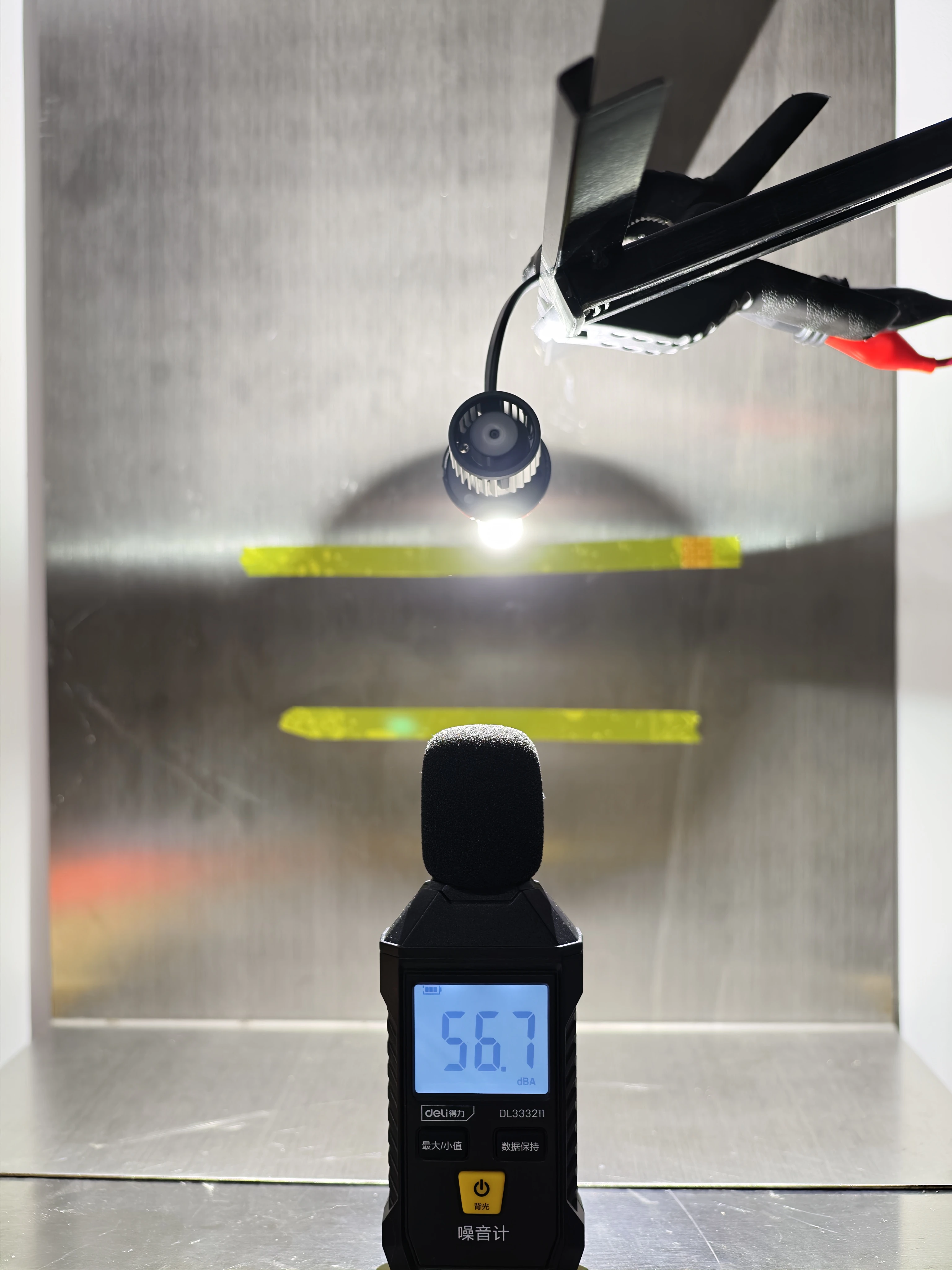
Illuminance was recorded at the defined E-Mark measurement-panel points at a distance of 3.5 m. The Philips sample operated at 13.2 V and was warmed for 30 minutes before the illuminance readings were taken. Emitter-area surface temperature was recorded after 20 minutes. Operating noise was measured at 5 cm.
What this review found
The review follows the product from the H11 interface and lamp structure through the emitter-board measurement, beam pattern, illuminance distribution, temperature and operating noise.
The Philips unit reached 1,735 lux at EMAX and 1,153 lux at 25V. The emitter hotspot measured 83.8 degrees C after 20 minutes, and the sound-level reading was 56.7 dBA at 5 cm.
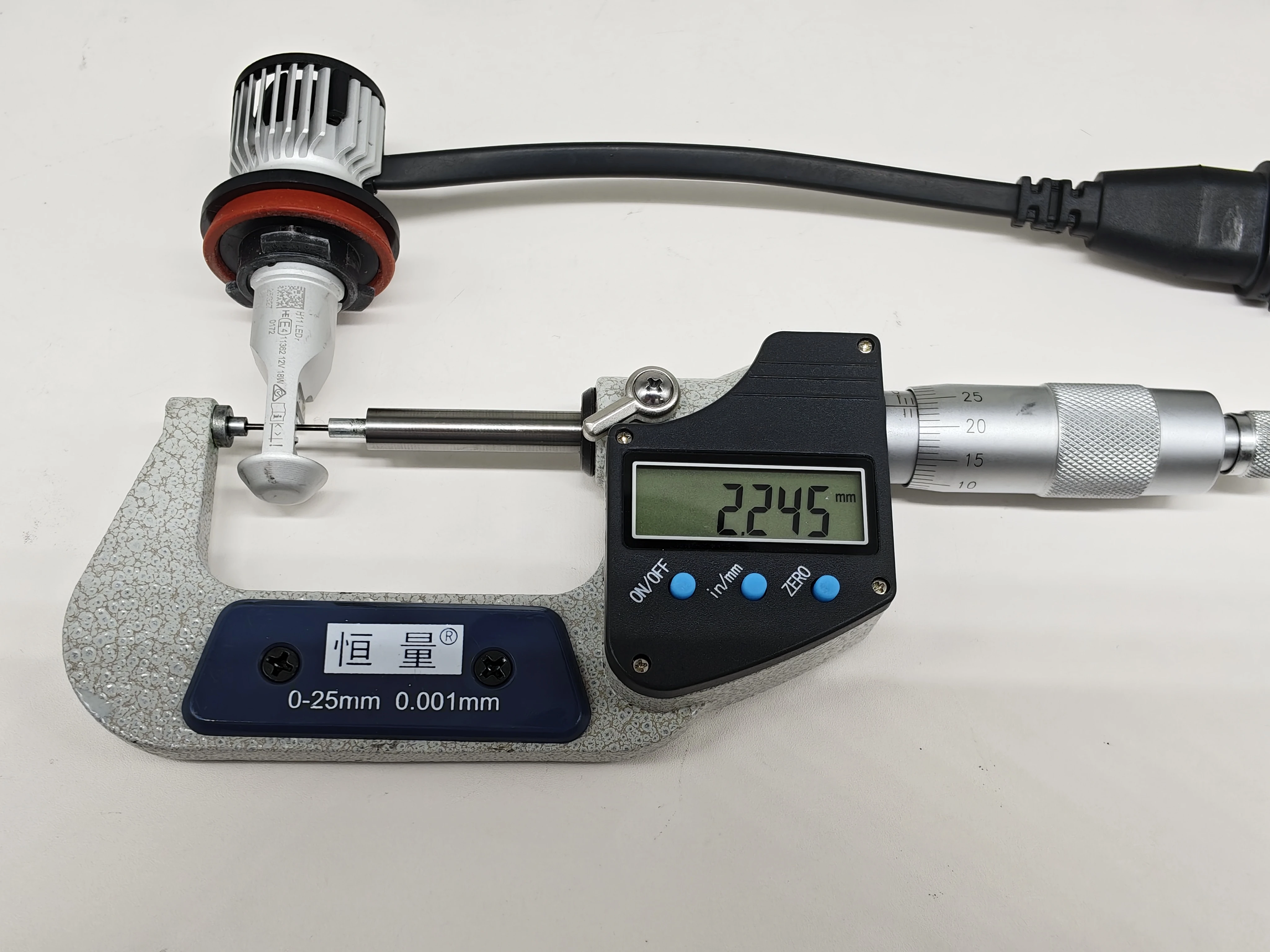
The measured emitter-board thickness was 2.245 mm. These observations describe the evaluated sample under the stated conditions; they are not a service-life prediction, a vehicle-fit guarantee or a substitute for approval documentation.
H11-specific PGJ19-2 interface and lamp construction
The Philips sample uses an H11 interface and a dedicated PGJ19-2 keyed base. The photographed product was documented from the front, side, connector and emitter views before performance testing. The exact approval identity and markings should be checked on the product supplied; an H11-sized connector alone does not establish H11 LEDr approval.
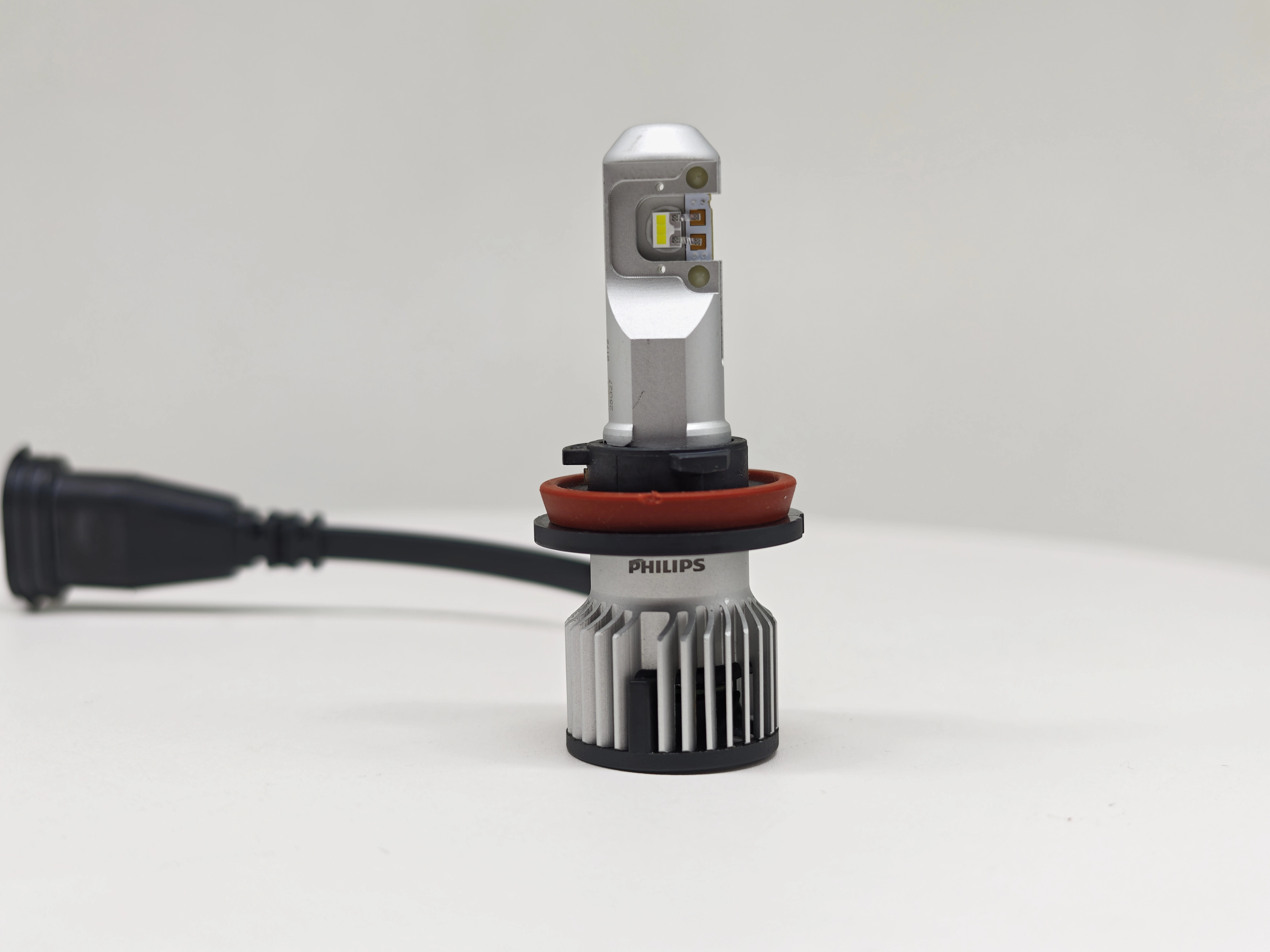
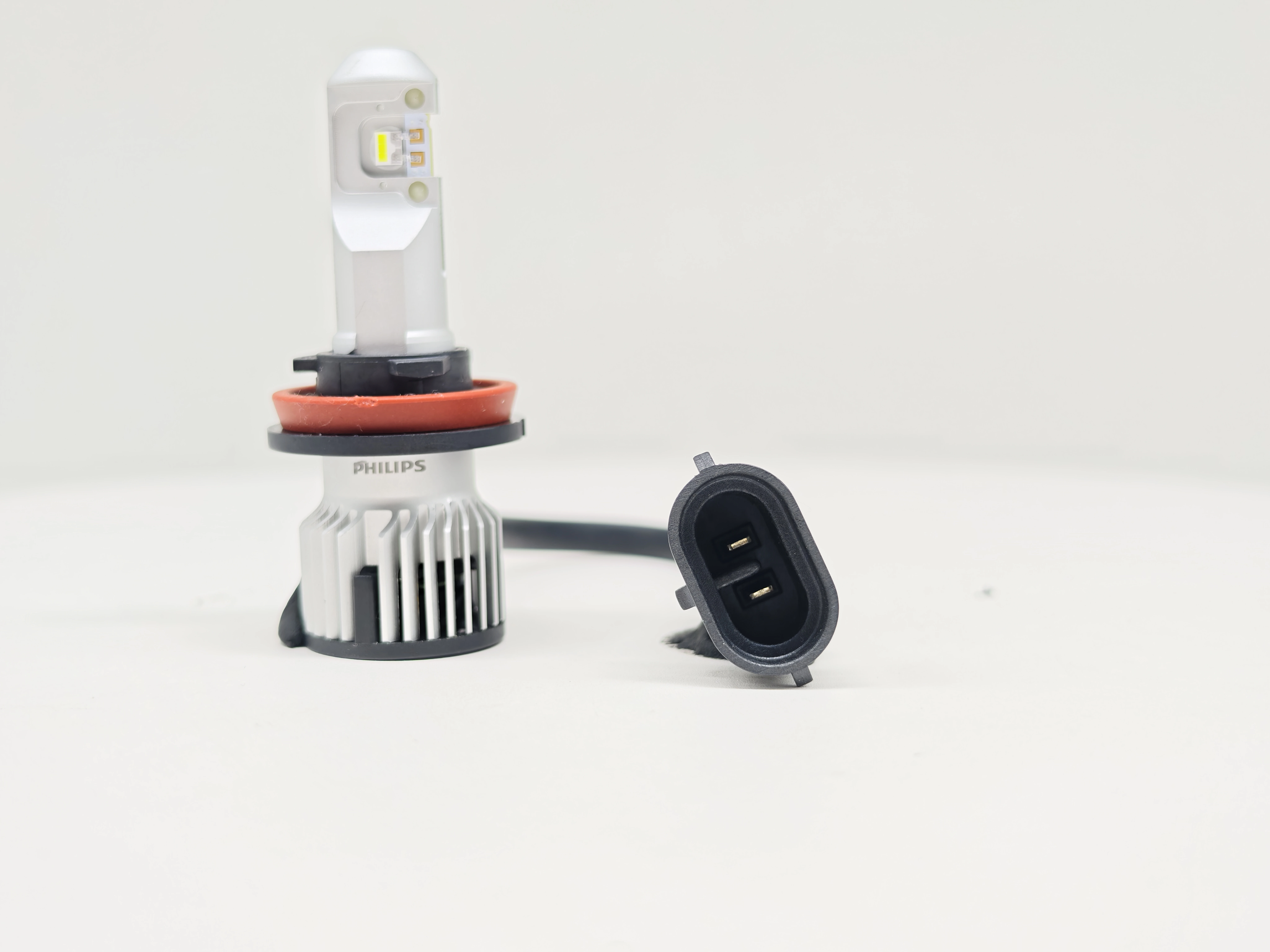
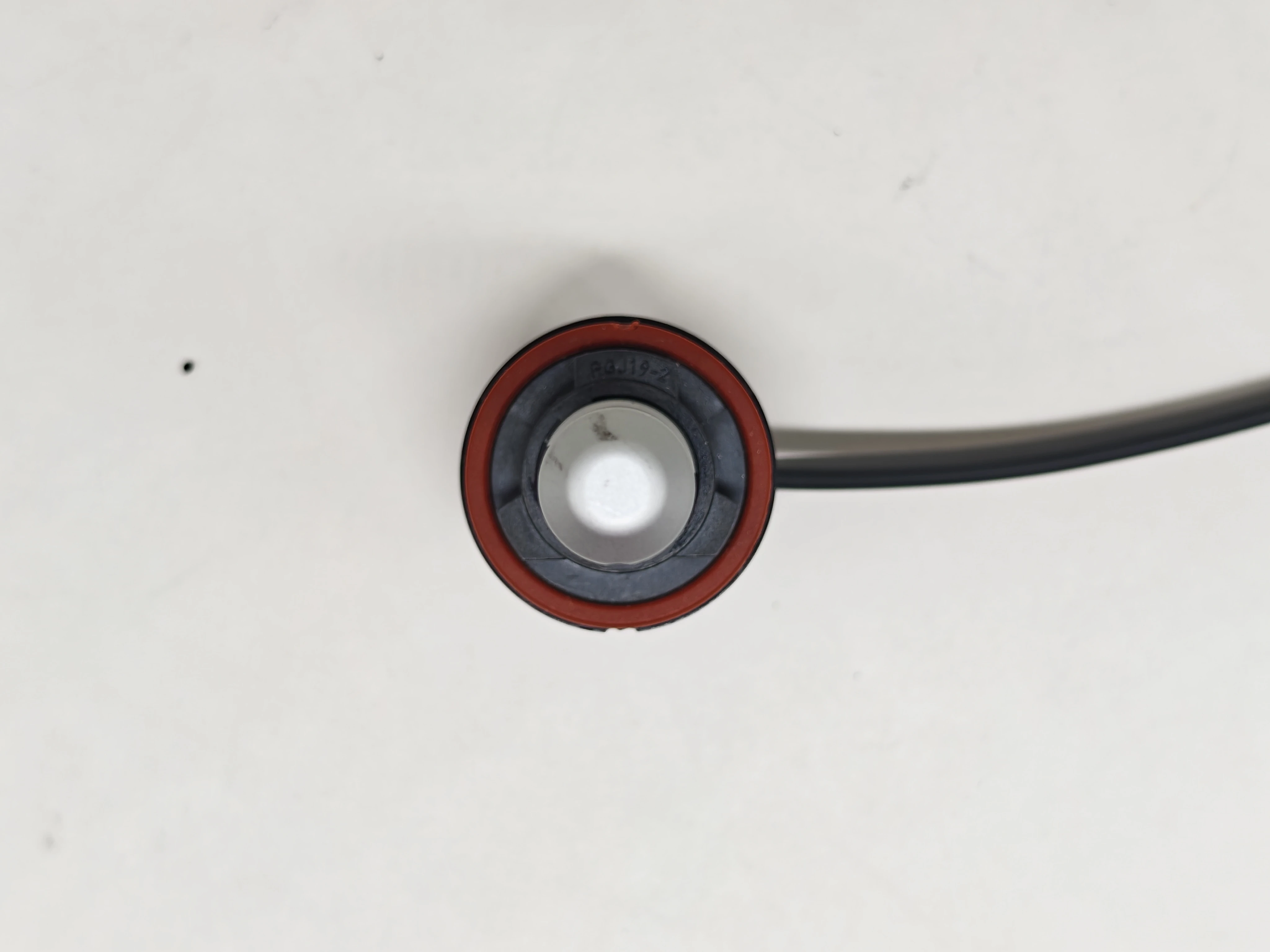
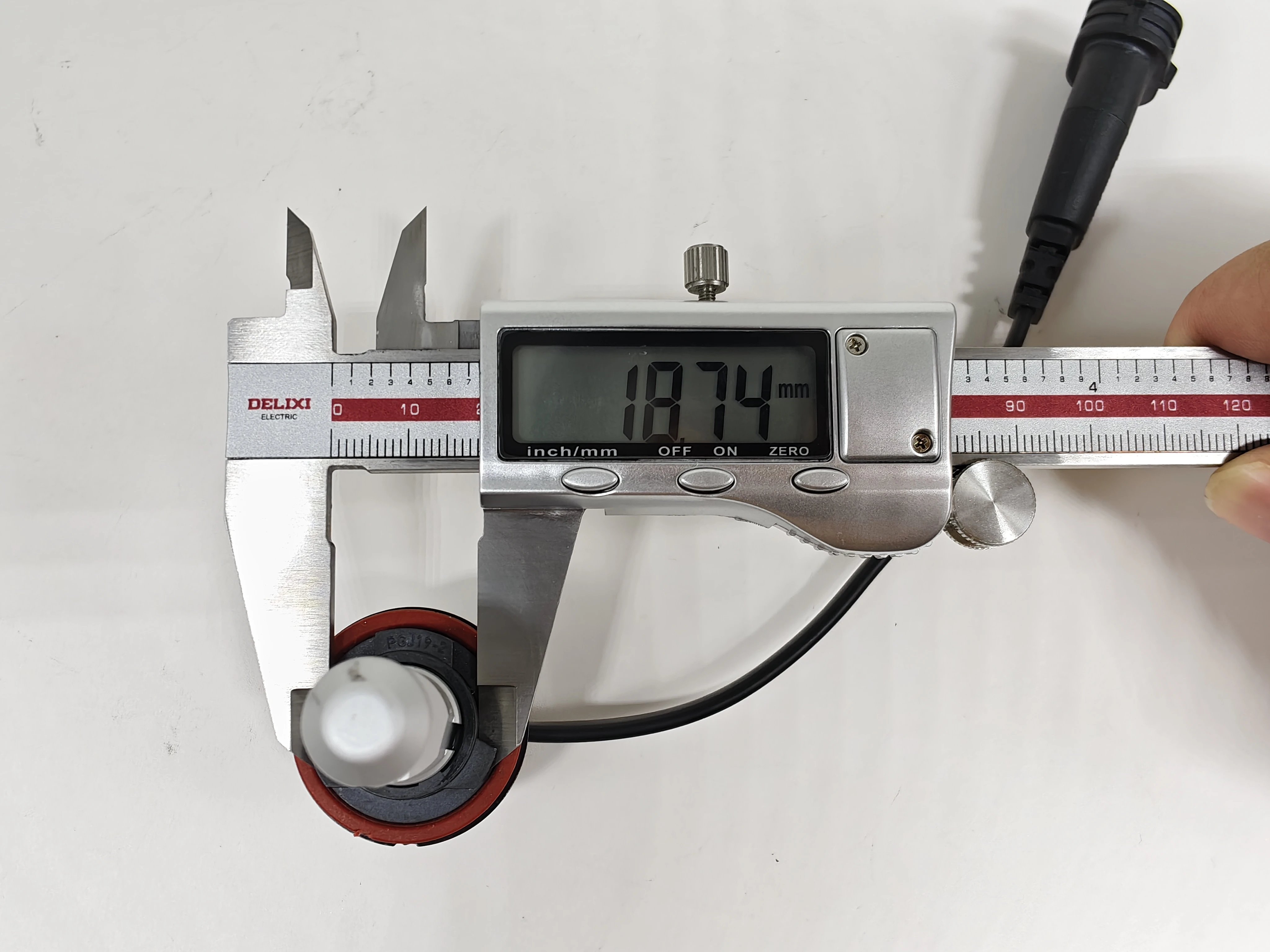
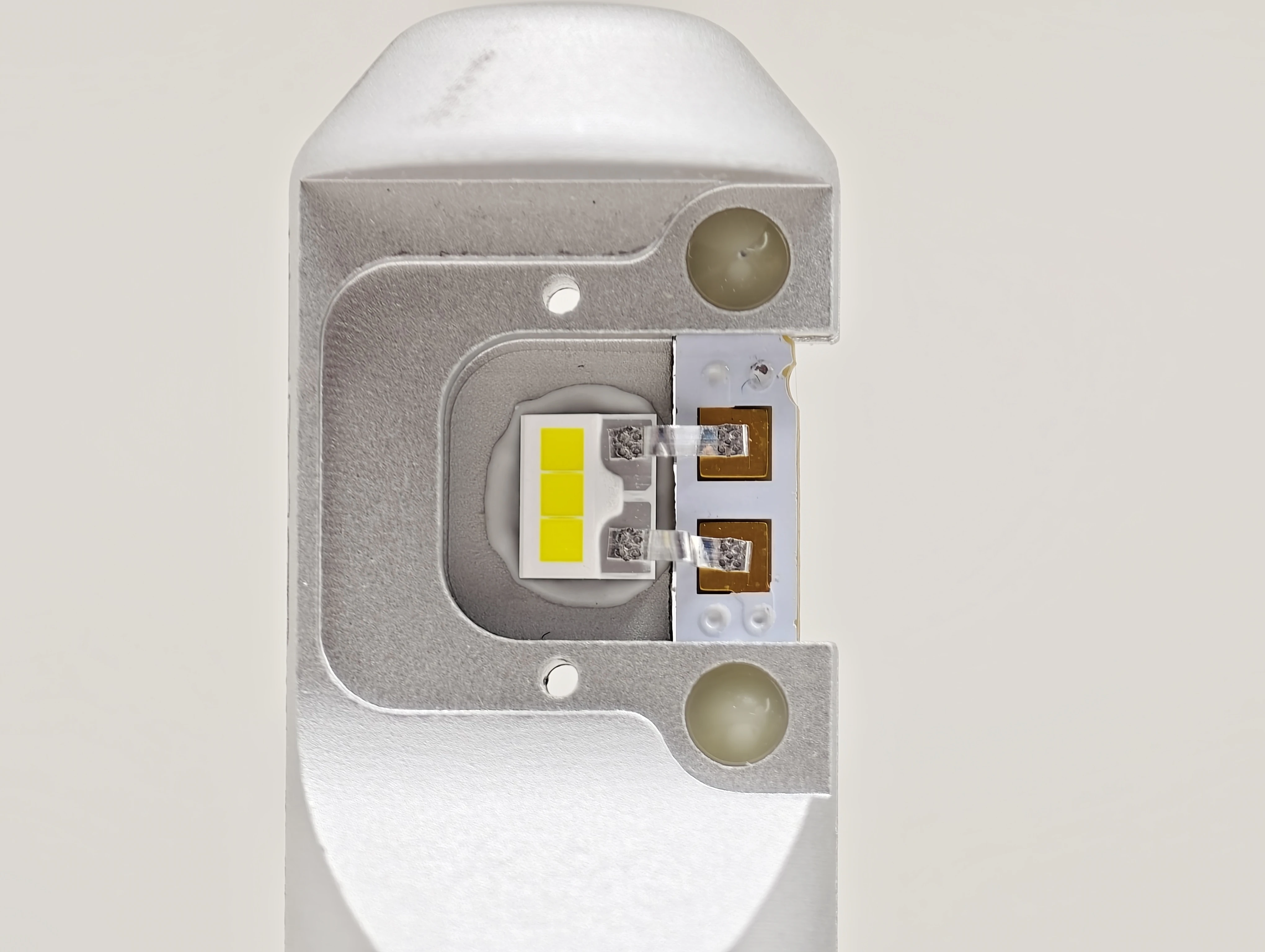
The photographed construction provides evidence about the evaluated sample only. Installation position, headlamp optic and vehicle-specific fit must be checked separately.
Emitter-board thickness: 2.245 mm
The measured emitter-board thickness was 2.245 mm. This is a direct dimensional observation from the photographed product, not a claim that thinner or thicker is automatically better. Optical performance depends on the complete relationship between the emitter position, emitting area, lamp geometry and the headlamp optic.
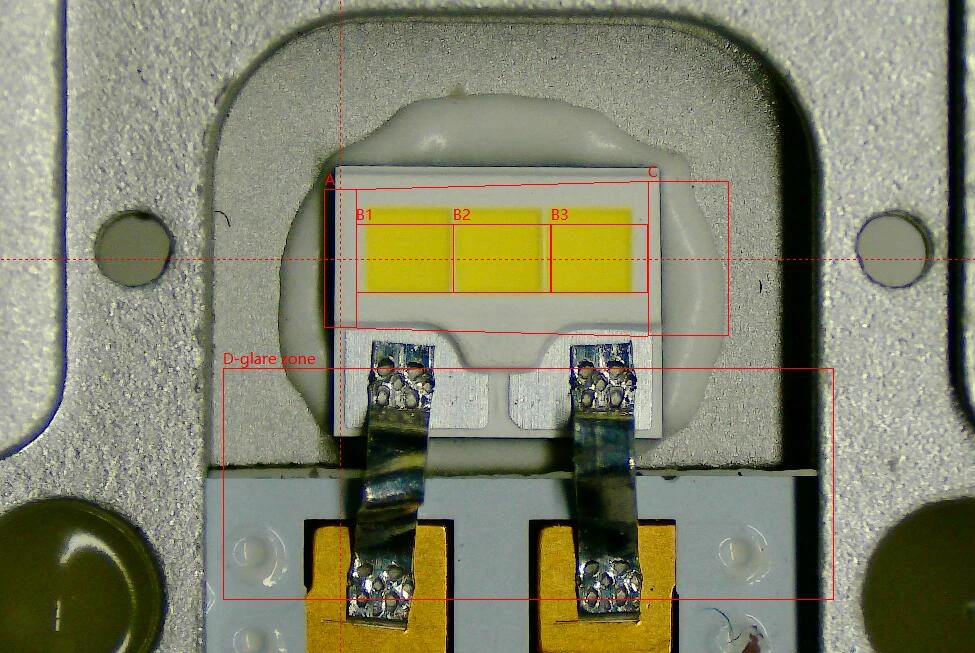
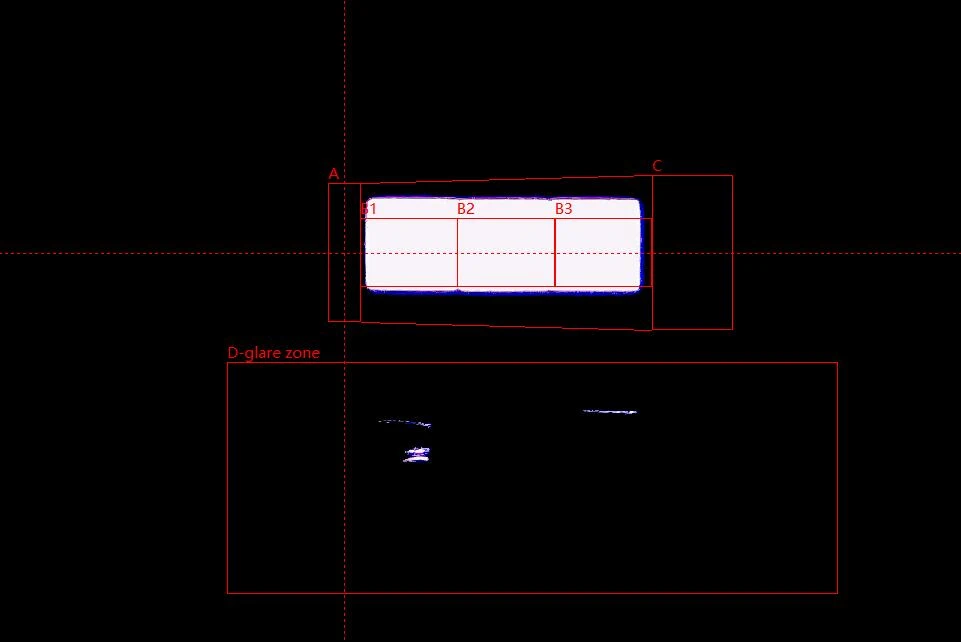
Core inspection: Box system emitting area
The Box system is a core H11 LEDr construction check. It records the position of the Philips LED emitting area relative to the reference axis and reference plane.
The available Philips Box images document the emitting-area position for the evaluated sample. They are construction evidence for this review, not a replacement for the complete approval file.
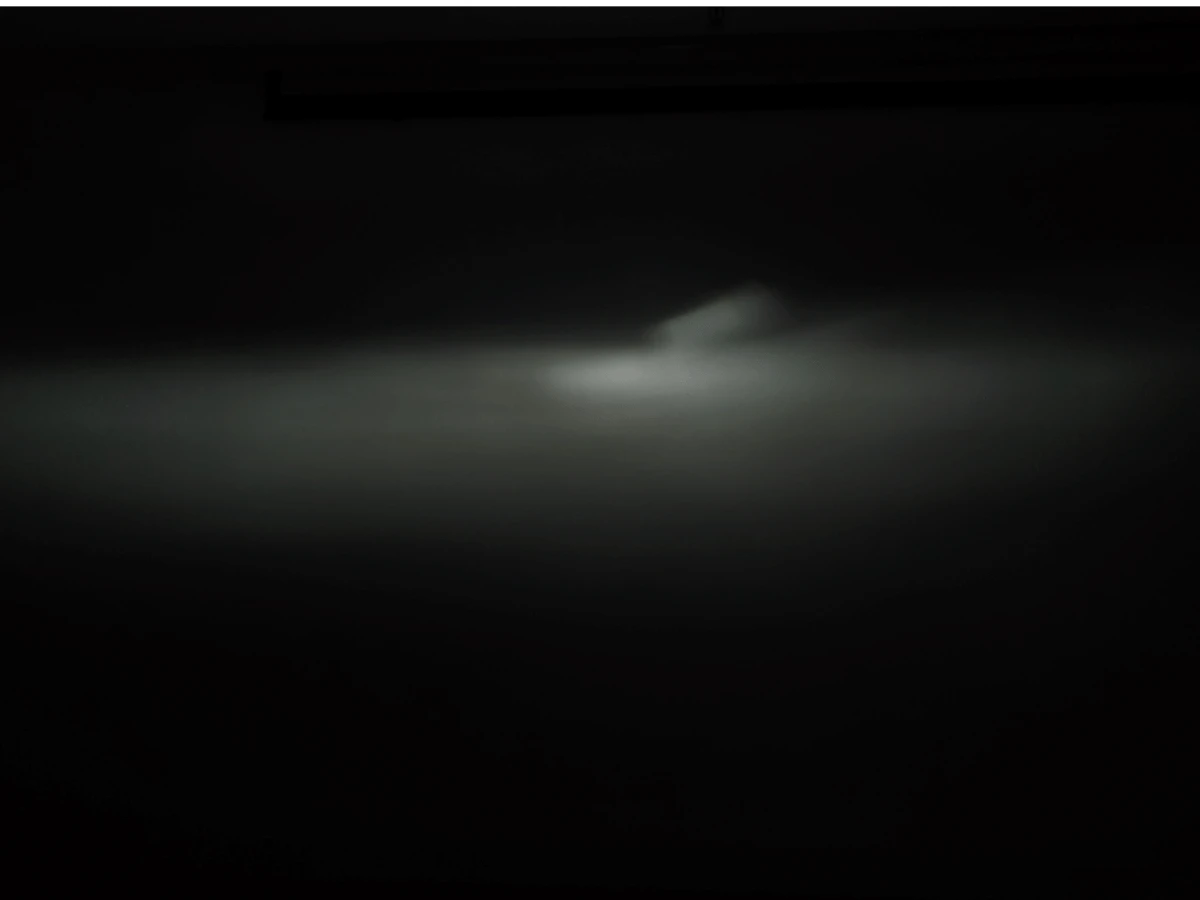
White-wall beam pattern
The white-wall image records the observed cutoff and the distribution produced by the evaluated Philips lamp in the test optic. A photograph is useful for checking the overall shape, but exposure and screen brightness can exaggerate or suppress local intensity. The image is paired with point measurements rather than used as the sole basis for a conclusion.
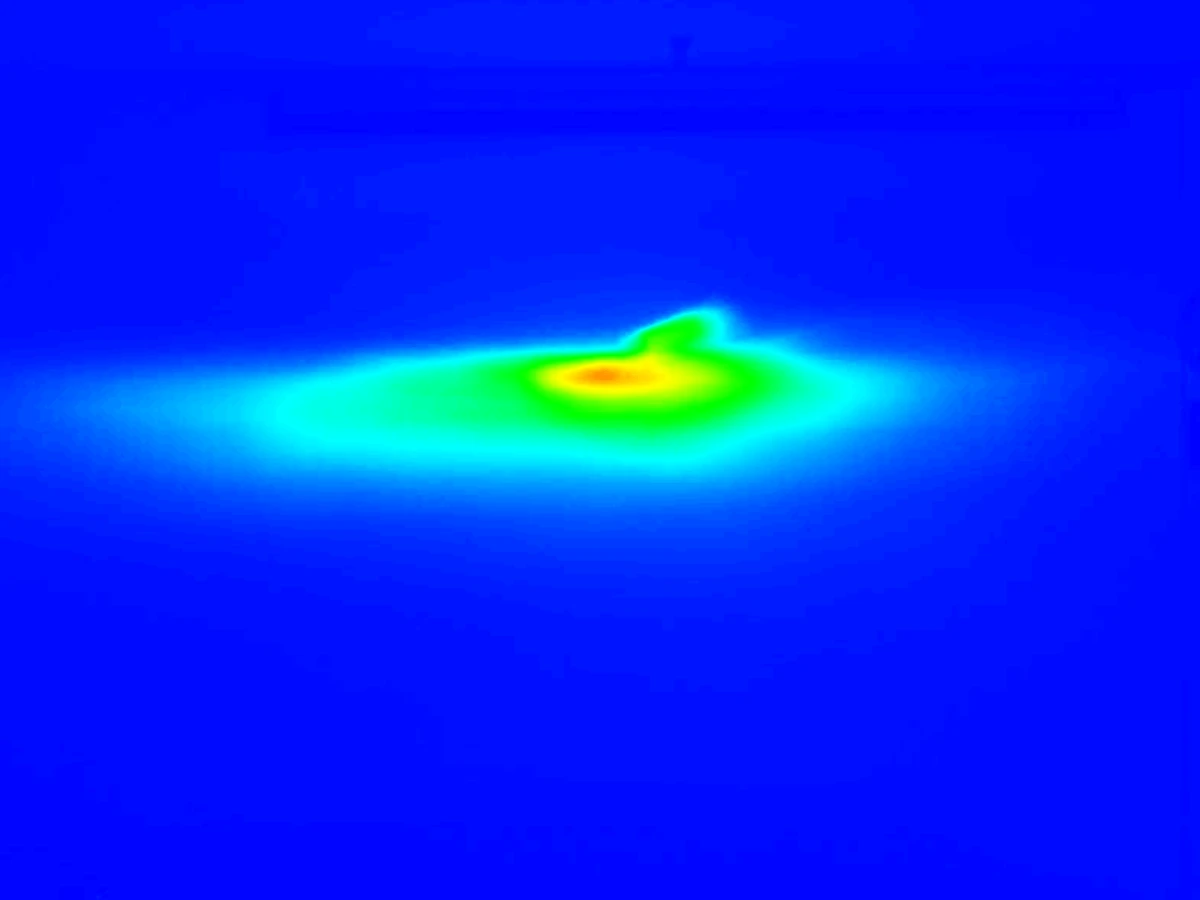
Rainbow map and hotspot distribution
The rainbow map shows where the light was concentrated in the test setup. The strongest area appears toward the central-right portion of the recorded pattern. The colour map is read together with the point measurements, not used as a standalone performance score.
Complete nine-point illuminance results
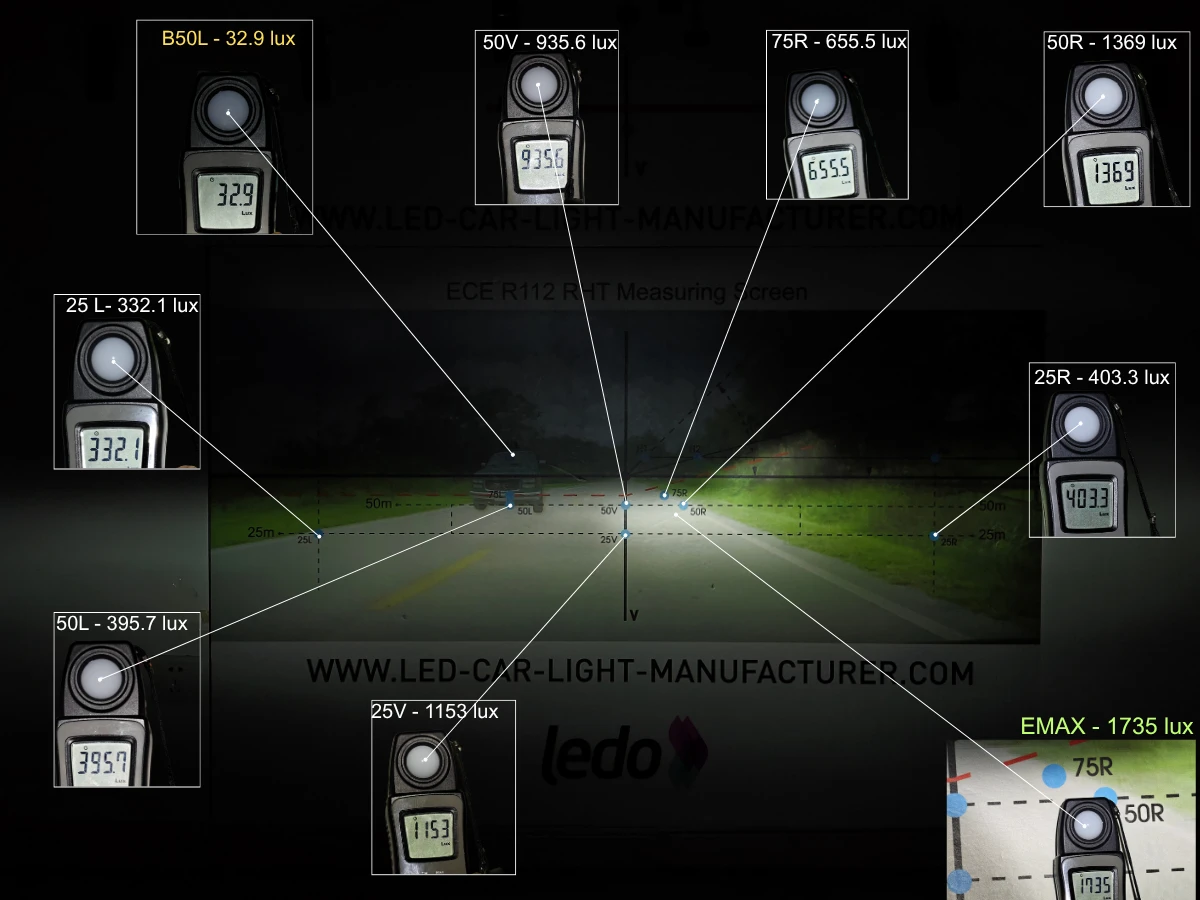
| Point | Measured illuminance | Reading area |
|---|---|---|
| 25L | 332.1 lux | Left-side point |
| 50L | 395.7 lux | Left-side point |
| B50L | 65.7 lux | Glare-control point |
| 50V | 935.6 lux | Centre point |
| 25V | 1,153 lux | Centre point |
| 75R | 655.5 lux | Right-side point |
| 50R | 1,369 lux | Right-side point |
| 25R | 403.3 lux | Right-side point |
| EMAX | 1,735 lux | Peak reference |
The nine-point results recorded 1,369 lux at 50R and 655.5 lux at 75R. B50L was 65.7 lux, and EMAX was 1,735 lux. These values should be read as a distribution rather than reduced to one headline number.
Temperature and operating noise
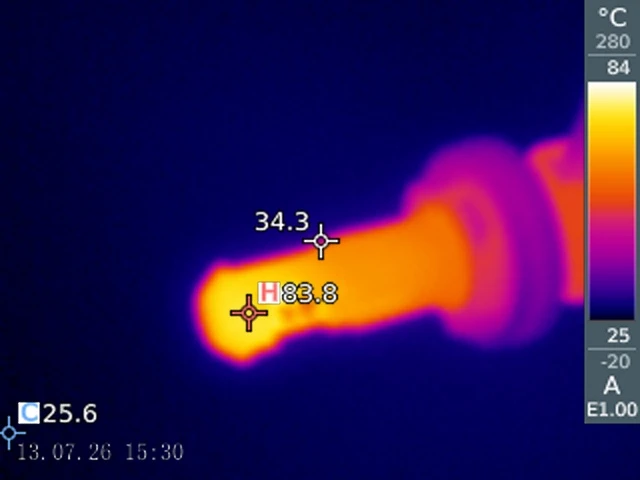
After 20 minutes, the thermal image recorded a maximum emitter-area surface temperature of 83.8 degrees C. This is a point temperature under the stated operating condition; chip junction temperature and service life were not measured.
Operating noise was 56.7 dBA at 5 cm. This is a close-range bench reading. Installed perception depends on enclosure, distance and vehicle background noise.
Philips H11 LEDr FAQ
What was the highest recorded illuminance?
EMAX was 1,735 lux. It is the peak reference; the complete nine-point table and beam images show the full distribution.
What does B50L mean?
B50L is a measurement point related to opposing-glare control. The recorded Philips value was 65.7 lux.
What does the 2.245 mm measurement represent?
It is the measured emitter-board thickness of the evaluated Philips sample. It is not a direct ranking of optical performance or product life.
What were the temperature and noise readings?
The emitter-area surface temperature reached 83.8 degrees C after 20 minutes, and the sound-level reading was 56.7 dBA at 5 cm. Both are bench measurements under the stated conditions.
What markings are visible on the product?
The available RV002 source records the product construction and measurements but does not provide a verified marking statement for this preview. The exact approval marking and configuration should be checked on the supplied unit.